Why Your Team’s Knowledge Is Leaking
You’ve got great engineers. Great tools. Great code. But new hires still take weeks to get up to speed. People keep asking the same questions. Decisions get rehashed. Meetings repeat themselves. Why? Because the real stuff - the vibe - never made it into your docs.
Most internal wikis only capture what happened. Not how it felt. Not why the team chose that path. Not the quiet moment when someone said, "Just trust me on this one," and everyone nodded because they’d been through it before. That’s the stuff that saves time. That’s the stuff that keeps people from burning out.
Teams that document the vibe - the energy, the tension, the breakthroughs - onboard new members 37% faster. They reduce context-switching by nearly a third. And retention? Up 42%. That’s not magic. That’s just good knowledge sharing.
What "Vibe-Coded" Actually Means
Vibe-coding isn’t about writing poetry. It’s not HR fluff. It’s the deliberate capture of the emotional and cultural context behind technical decisions. Think of it as the difference between a recipe and the story of how your grandma made that dish - the burnt pan, the last-minute spice swap, the way she laughed when the dog stole the dough.
When a team builds a new API endpoint, a traditional wiki might say:
- Endpoint: /api/v2/users
- Auth: OAuth2
- Rate limit: 100/hr
A vibe-coded version adds:
- Endpoint: /api/v2/users
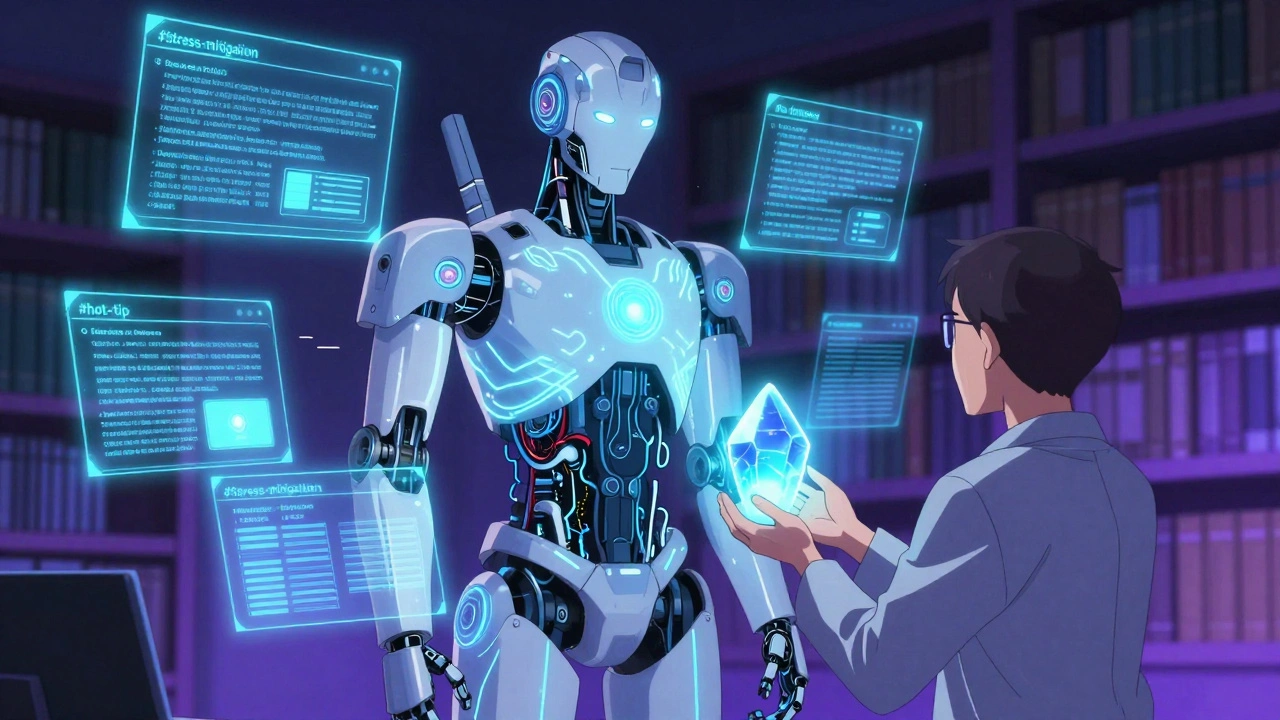
- Auth: OAuth2 - we chose this after three failed attempts with JWT. The team was exhausted. We held a 15-minute huddle at 7 PM, drank too much coffee, and agreed: "Let’s not fight auth again. Use what works." #stress-mitigation #team-decision
- Rate limit: 100/hr - lowered from 500 after the billing system crashed twice in April. We didn’t fix the code first - we fixed the feedback loop. #hot-tip
That’s it. Short. Real. Human. And infinitely more useful.
The Tools That Actually Support Vibe Documentation
Not all wikis are built for this. Confluence? Great for specs. Terrible for soul. Most teams using vanilla Confluence give up on vibe docs within months. Why? It feels like paperwork.
Here’s what works in 2025:
| Platform | Best For | Vibe Features | Price (per user/month) |
|---|---|---|---|
| ProofHub | Small teams (under 30) | Emoji sentiment tags, vibe snippets embedded in timelines, Zoom auto-transcripts | $45/month (flat, up to 50 users) |
| ThoughtFarmer | Enterprise, 500+ users | AI-powered Vibe Analytics dashboard, 12 cultural metrics, sentiment trend tracking | $12 |
| Nulab Backlog | Dev teams using Jira | #vibe-tags (#collaborative-breakthrough, #quiet-focus), integrates with Slack | $9.50 |
| ProProfs Knowledge Base | Hybrid teams needing video demos | 90-second video snippets, embedded audio clips, leaderboard for top contributors | $2.99 |
| MediaWiki (open-source) | Teams with dev ops capacity | Custom plugins needed; no native vibe features | $0 (but $15K-$50K/year in setup) |
ProofHub’s emoji tagging system - where you can slap on a 🚀 for "high energy" or 💤 for "low bandwidth" - saw 39% higher adoption than enterprise tools in teams under 30. Why? It’s fast. It’s fun. It doesn’t feel like a chore.
ThoughtFarmer’s AI dashboard tracks emotional patterns across projects. If a team’s "collaborative breakthrough" tags drop for two weeks straight, it flags potential burnout. That’s not surveillance. That’s support.
Video Demos: The Secret Weapon
Text is slow. Video is fast.
Teams using 90- to 120-second video demos in their wikis see 63% more engagement than those relying on text. Why? Because you see the person. You hear their voice. You see them fumble with the code, laugh, then fix it. That’s learning.
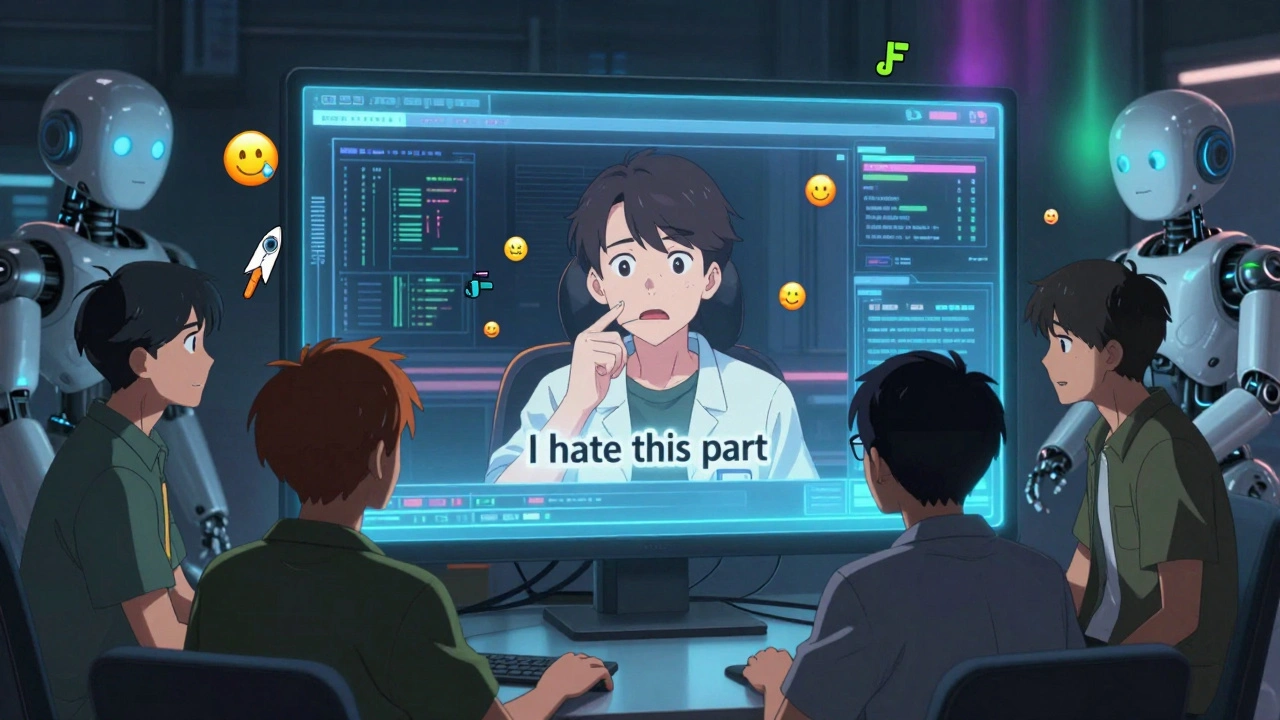
At Box, developers started recording quick clips titled "Here’s why we did it this way." One clip showed a senior engineer debugging a race condition while muttering, "I hate this part. Always does this." Then he fixed it in 30 seconds. The video got 2,000 views in a week. No one asked for it. They just watched.
Don’t film polished demos. Film real moments:
- How you handled a last-minute change from product
- Why you rejected a "better" solution
- Who you called for help, and why
- What you learned when it blew up
Tag them. #confusion-to-clarity #we-were-wrong #ask-jamal
How to Start Without Making It Feel Like Another Task
The biggest failure? When leadership treats vibe docs like compliance.
One fintech startup rolled out vibe documentation during a layoff. People didn’t trust it. They saw it as a way to spy on morale. 78% abandoned it in three weeks.
Here’s how to avoid that:
- Start with one pilot team - not the whole company. Pick the team with the highest psychological safety score (use Google’s re:Work survey).
- Appoint a "vibe champion" - one person per 15 team members. Not a manager. Someone respected. Someone who listens.
- Make it part of your existing workflow. At Box, they added a "vibe snippet" field to their Slack #help channel. When someone asked, "Why did we use Redis here?" the bot replied: "Check the vibe tag #redis-decision in the wiki." No extra steps.
- Don’t require it. Reward it. The most successful teams use a leaderboard. Top 3 vibe contributors get a coffee gift card or an extra day off. Not a bonus. Just recognition.
At Doctolib, devs post "#hot-tips" - one-liners like: "Don’t touch the cache key unless you’ve seen the audit log. It’s a landmine." Those posts get 3.2x more replies than standard docs. Why? They’re useful. And they’re human.

The Pitfalls (And How to Avoid Them)
Vibe-coding isn’t risk-free. Here’s what goes wrong:
- Vibe-washing: Teams write fake positivity. "We’re so collaborative!" while ignoring real tension. Dr. Ethan Bernstein found 41% of early adopters did this. Result? More stress, not less.
- Over-automation: AI tagging emotional tone? 89.7% accurate, yes. But employees in Pew’s 2025 survey said 58% felt creeped out. Don’t let AI label your team’s mood. Let people label it themselves.
- Too formal: If your template says "Please describe the emotional climate of this sprint," you’ve already lost. Use prompts like: "What was the mood when you pushed this?" or "What did you wish someone had told you?"
- No feedback loop: If no one reads the docs, they die. Track usage. Ask: "Did the wiki help you this week?" Make it part of your retros.
The fix? Authenticity over polish. Imperfection over perfection.
What Success Looks Like
Two years ago, a team at a SaaS company spent 8 weeks onboarding new hires. They had 50 pages of docs. No one read them.
They switched to vibe-coding:
- Added 12 video snippets (under 2 minutes each)
- Tagged every doc with #why-we-decided-this or #dont-do-this
- Put a "vibe of the week" box on their Slack channel - a random team member shares one real moment from their week
Onboarding time dropped to 11 days.
New hires said: "I didn’t just learn how to code. I learned how this team thinks."
That’s the goal.
The Future Is Human-First
By 2027, 70% of high-performing teams will use vibe documentation. But 60% of those will fail - not because the tech doesn’t work, but because they treated it like a checklist.
The winners? The ones who remember: knowledge isn’t in the files. It’s in the people. The wiki just helps you hold onto it.
Don’t build a library of facts. Build a living archive of your team’s story.
Because the next person who joins? They don’t just need to know how to fix the bug.
They need to know how to feel like they belong.
What’s the difference between a regular wiki and a vibe-coded wiki?
A regular wiki documents what was done: code, specs, steps. A vibe-coded wiki documents why it was done that way - the emotions, tensions, shortcuts, and unspoken agreements behind the decisions. It answers not just "how," but "how did we feel when we did it?"
Do I need special software to do vibe coding?
Not necessarily. You can start with any wiki and add simple tags like #stress-mitigation or #hot-tip. But platforms like ProofHub, Nulab Backlog, and ProProfs have built-in tools - emoji tagging, video embedding, sentiment analysis - that make it easier and more engaging. If you’re scaling, use a tool designed for it.
Won’t recording team emotions feel invasive or creepy?
Only if it’s forced or automated. The key is voluntary, human-led tagging. Let people choose what to share and how. Don’t use AI to label moods. Don’t make it mandatory. If it feels like surveillance, it fails. If it feels like sharing a story, it works.
How do I get engineers to participate if they think it’s "fluffy"?
Show them the results. At Box, they integrated vibe snippets into Slack’s help channel. When engineers asked a question, the bot linked to a real, short video of someone fixing the exact issue. No extra work. Just faster answers. Once they saw how much time it saved, participation grew naturally.
Is vibe documentation GDPR-compliant?
Yes - if you handle it right. The EU clarified in June 2025 that emotional context can be personal data. So don’t record names in videos unless you have consent. Don’t store audio clips longer than needed. Use pseudonyms. Be transparent. Treat vibe data like any other sensitive info.
What if my team is remote or distributed?
It’s even more important. Remote teams lose the hallway conversations that transfer tacit knowledge. Vibe docs replace those moments. Video snippets, audio clips, and casual tags help remote members feel included in the culture - not just the code.
How do I measure if vibe documentation is working?
Track usage: page views, video plays, tag usage. Ask new hires: "Did this doc help you understand why we did X?" Monitor onboarding time and repeat questions. If those drop, you’re succeeding. Don’t rely on surveys alone - look at behavior.
Michael Gradwell
This is just corporate fluff dressed up as innovation. You’re telling me we need emoji tags and video clips to remember why we chose Redis? We’re engineers, not TikTok creators. The code should speak for itself. If people can’t figure out the context from the commit history and PR comments, they shouldn’t be on the team.
Flannery Smail
ProofHub costs $45/month? That’s a joke. You can run a self-hosted MediaWiki with a few custom scripts for less than $100/year. And let’s be real - no one’s gonna tag their emotions in a tool that looks like it was designed by a middle manager who just got back from a retreat with a motivational speaker.
Ryan Toporowski
I love this so much 🚀💖 I work at a startup where we started doing vibe snippets in Slack and it’s been a game-changer. One guy recorded a 90-second clip of him yelling at his monitor while fixing a race condition - now it’s our most viewed doc. New hires say they feel like they ‘know’ the team before they even meet us. Keep it real, keep it human 💪
Samuel Bennett
Wait - ThoughtFarmer charges $12 per user/month but has AI sentiment analysis? That’s impossible. Either it’s a scam or it’s scraping public Slack logs without consent. And you’re telling me GDPR is fine as long as you ‘pseudonymize’? That’s not how GDPR works. You’re asking for a class action lawsuit. Also, ‘#hot-tip’? Really? That’s not a tag, that’s a cringe.
Samar Omar
The entire premise of this article is profoundly naive. You presume that emotional context can be captured in a wiki, as if human experience were a dataset to be indexed. The ‘vibe’ is not a metadata field - it is the ephemeral residue of collective trauma, unspoken hierarchies, and micro-aggressions that no algorithm, emoji, or video snippet can ever encode. To reduce the soul of a team to a #stress-mitigation tag is not documentation - it is epistemological violence disguised as innovation. The real failure is not in the tools - it is in the belief that technology can mediate the irreducible complexity of human labor.
chioma okwara
I dont even know why we need all this. Just write it down simple. Like: 'dont touch the cache key unless u seen the audit log. its a landmine.' thats all. no emoji no video no AI. just real talk. and stop calling it vibe coding. its just good docs.