
When AI starts writing your code, who’s responsible when it breaks? That’s the question companies are scrambling to answer as vibe coding - the practice of using AI tools like GitHub Copilot and Cursor to generate code from natural language prompts - becomes standard in software teams. But here’s the catch: traditional compliance frameworks like SOC 2 and ISO 27001 weren’t built for this. They assume humans write every line. They don’t account for an AI suggesting a vulnerable API call, or a developer approving it without understanding why it’s risky. The result? Audit failures, compliance gaps, and real-world breaches. By 2026, 70% of enterprises will need specialized compliance controls for AI-assisted development, up from just 15% in 2024. If your team is using vibe coding and still relying on old-school security checks, you’re already behind.
Why SOC 2 and ISO 27001 Fall Short for AI-Generated Code
SOC 2 audits focus on five Trust Service Criteria: Security, Availability, Processing Integrity, Confidentiality, and Privacy. ISO 27001 demands documented controls across 14 domains, from access management to incident response. Both assume human accountability. But vibe coding introduces a new kind of risk: untraceable decision-making. For example, a developer types: "Build a login endpoint that stores passwords securely." The AI generates code using bcrypt - great. But what if it also adds a debug log that accidentally writes raw user emails to a public server? The code passes unit tests. The CI/CD pipeline passes. The auditor sees a clean build. But the vulnerability came from a prompt, not a commit. And no one can prove who prompted it, or why. Knostic’s January 2025 report found that organizations using standard SOC 2 controls experienced 43% more audit findings in development lifecycle controls than those with vibe-specific policies. Why? Because traditional audits look at code changes, not prompt histories. They check if a file was modified, not whether the AI was given unsafe instructions.What Makes a Vibe Coding Compliance System Work?
Compliant vibe coding isn’t about adding more tools. It’s about redesigning the development pipeline around three core principles: traceability, enforcement, and accountability. Traceability means knowing who made the request, what prompt was used, when it was generated, and why it was approved. Knostic Kirin 2.3 captures over 275 data points per AI-generated code change - from the exact prompt text to the developer’s role, IDE version, and even the ambient temperature of the machine (yes, really). This isn’t fluff. It’s audit-ready evidence. Enforcement means blocking risky code before it leaves the IDE. Traditional tools scan code after it’s committed. That’s too late. Leading platforms like Knostic and Contrast Security now integrate directly into VS Code and JetBrains IDEs. They scan dependencies in real time, block vulnerable packages before they’re added, and flag prompts that could lead to insecure patterns. One financial firm reduced vulnerable package integrations by 97.3% using this approach. Accountability means every AI-generated line must be reviewed by a human. Not just "review," but documented review. Gartner and NIST both stress that AI-generated code requires enhanced verification - not replacement - of human oversight. Superblocks’ playbook mandates a human-in-the-loop workflow: no commit without a signed-off review flag.Key Technical Requirements
A compliant vibe coding system doesn’t work with random plugins. It needs specific, integrated controls:- IDE-Level Scanning: Must support VS Code 1.85+, JetBrains 2023.3+, and integrate with real-time NVD databases to block known vulnerable dependencies before they’re even typed.
- Secrets Management: HashiCorp Vault or AWS Secrets Manager must scan all code snippets in the IDE for accidentally embedded API keys, passwords, or tokens. Legit Security’s framework requires 100% credential scanning - no exceptions.
- CI/CD Integration: GitHub Actions, GitLab CI, or Jenkins must enforce policy gates. If the AI-generated code lacks a documented review flag, the pipeline stops.
- Runtime Monitoring: Contrast Security’s AVM tool identifies vulnerabilities in live AI-generated code with 89% accuracy - far better than traditional SAST tools at 62%.
- Prompt Logging: Every prompt must be stored, versioned, and linked to its generated output. Without this, you can’t prove compliance during an audit.
Where It Fails: Prompt Engineering Risks
The biggest vulnerability in vibe coding isn’t the AI. It’s the human giving it instructions. TechTarget’s September 2024 analysis found that 68% of compliance failures came from poorly constrained prompts. A developer might type: "Generate a file upload handler that accepts any file type." The AI builds it. The code works. But it allows .exe uploads. No one caught it because the prompt didn’t say "only allow .pdf" - and the system didn’t enforce that constraint. Solutions? Prompt validation templates. Superblocks found that using pre-approved prompt templates reduced false positives by 63% and cut compliance failures by half. For example:- "Generate a secure user authentication flow using OAuth 2.0 and JWT tokens with a 15-minute expiration. Do not store tokens in localStorage."
- "Build a REST endpoint that accepts JSON input, validates schema, and logs only the HTTP status code - no request body."

Industry Adoption and Regulatory Pressure
Adoption isn’t optional anymore - it’s mandated. - Financial services lead at 73% adoption of specialized vibe coding controls (Black Duck, Q4 2024). - Healthcare and government sectors are now requiring traceable AI code for HIPAA and FedRAMP compliance. - The EU’s AI Act, effective February 2026, requires "comprehensive documentation of AI development processes" - meaning every prompt, every change, every review must be archived. - NIST’s updated SP 800-218 (January 2025) explicitly demands "traceability from prompt to production code" for any system claiming compliance. Gartner forecasts the AI development security market will hit $4.2 billion by 2027. Compliance controls make up 68% of that. If you’re not investing here, you’re not just behind - you’re exposed.Implementation Roadmap
Rolling this out isn’t a weekend project. It takes structure.- Package Governance (2-4 weeks): Define which libraries are allowed. Block all unapproved dependencies. Use Knostic or Contrast to auto-scan.
- Plugin Control (1-3 weeks): Deploy IDE plugins to all developers. Enforce mandatory prompts. Train teams on approved templates.
- In-IDE Guardrails (3-5 weeks): Activate real-time scanning for secrets, vulnerabilities, and prompt risks. Set thresholds for blocking.
- Audit Automation (4-6 weeks): Connect your system to SIEM tools. Automatically generate SOC 2 and ISO 27001 evidence. No manual logs. No Excel sheets.
Real-World Consequences of Getting It Wrong
A healthcare startup failed HIPAA compliance in late 2024 because their AI-generated code accidentally logged patient names to a public log file. The CTO told auditors: "We don’t know if the developer wrote it or the AI did." The auditor shut them down. They lost their certification. Their insurance premiums jumped 200%. Another team at a fintech firm spent three weeks manually matching AI-generated code snippets to their prompts just to satisfy a SOC 2 auditor. They had no automated logs. No traceability. No evidence. They failed. On the flip side, Capital One cut their SOC 2 evidence collection from 20 days to 3 - thanks to automated, auditable prompt tracking. That’s not magic. That’s compliance done right.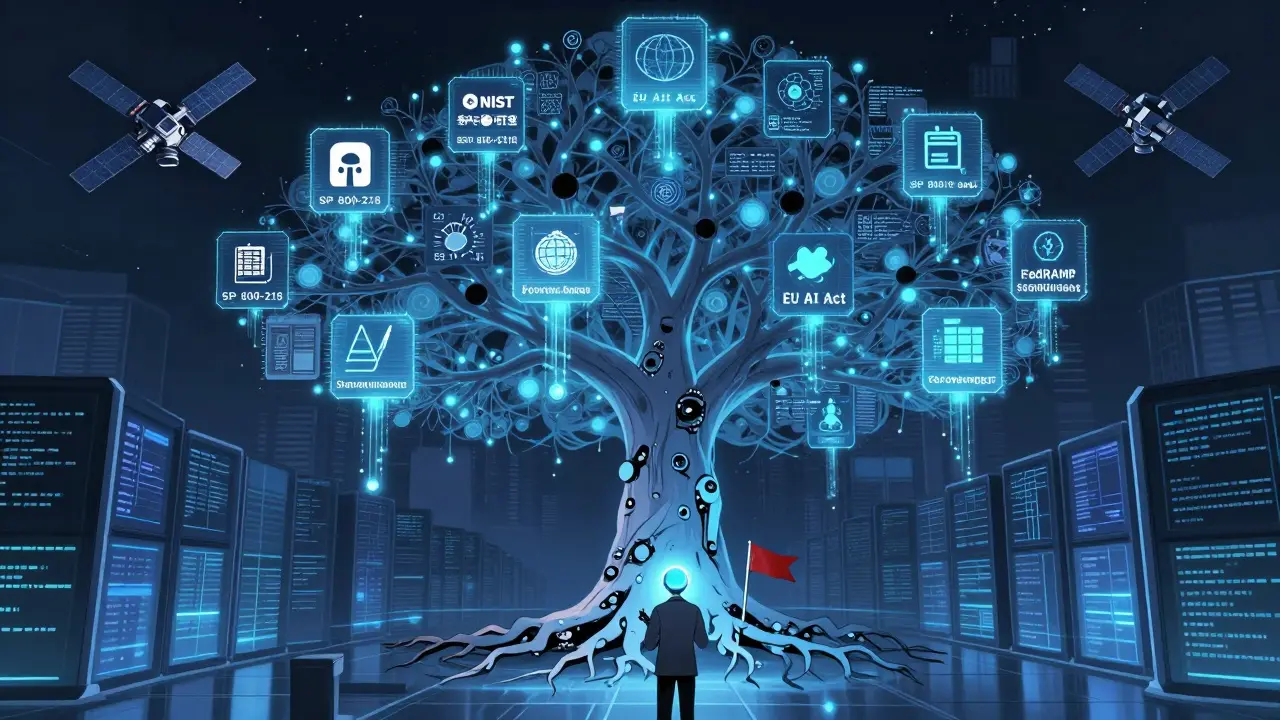
Expert Consensus: Human Oversight Isn’t Optional
Dr. Emily Chen from NIST put it bluntly: "AI-generated code requires enhanced verification processes that align with NIST SP 800-218 but extend beyond traditional human-written code reviews." Contrast Security’s CTO, David Harvey, says: "The most critical element is establishing a framework of developer accountability and best practices." You can’t outsource compliance to an AI. You can’t automate trust. You can only automate evidence - and empower humans to make the final call.What’s Next? The Future of Vibe Coding Compliance
By 2027, Forrester predicts 85% of vibe coding compliance will be enforced through automated policy engines - not manual reviews. That means policies written in code, applied in real time, and updated as AI models evolve. Knostic’s Kirin 3.0 (shipping Q2 2025) will auto-map generated code to SOC 2 trust principles with 95% accuracy. Contrast Security’s AVM 2.0 will detect ISO 27001 control violations directly in the IDE. But the real shift? Moving from "compliance as a checkpoint" to "compliance as a continuous flow." The goal isn’t to pass an audit. It’s to never fail one.FAQ
Can I use standard SOC 2 controls for vibe coding?
No. Standard SOC 2 controls assume code is written and reviewed by humans. Vibe coding introduces AI-generated artifacts that lack traceability, making traditional audit trails incomplete. Without prompt logging, IDE-level scanning, and human-in-the-loop review workflows, you’ll fail audits. Gartner found that organizations using standard controls had 43% more audit findings in development lifecycle controls.
What’s the biggest risk in vibe coding compliance?
The biggest risk is untraceable prompt engineering. If a developer uses a vague prompt like "make a login system," the AI might generate insecure code that passes tests but contains hidden vulnerabilities. Without strict prompt templates and logging, you can’t prove who asked for what - and auditors won’t accept that as evidence. TechTarget found 68% of compliance failures stemmed from poorly constrained prompts.
Do I need to hire new staff to handle vibe coding compliance?
Not necessarily, but you’ll need dedicated roles. Black Duck’s research shows teams require 2.3 additional FTEs for specialized compliance functions - not to write code, but to configure policy engines, manage prompt templates, and train developers. You can repurpose existing security or DevOps staff, but they’ll need training in AI risk, prompt engineering, and audit automation tools like Knostic or Contrast Security.
Which industries are most affected by vibe coding compliance?
Financial services lead adoption at 73%, followed by healthcare and government, due to strict regulations like HIPAA, FedRAMP, and the EU AI Act. Manufacturing and retail lag behind at 29% adoption because they’re less regulated. But if your software touches user data, handles payments, or integrates with public systems, you’re at risk - regardless of industry.
How long does it take to implement vibe coding compliance controls?
A full rollout takes 10-18 weeks, broken into four phases: package governance (2-4 weeks), IDE plugin deployment (1-3 weeks), in-IDE guardrails (3-5 weeks), and audit automation (4-6 weeks). Teams that rushed implementation saw 58% more developer resistance and higher compliance failure rates. Patience and phased adoption are critical.
Is there a way to reduce false positives from compliance tools?
Yes - use pre-approved prompt templates. Superblocks’ case studies show that teams using standardized, vetted prompts reduced false positives by 63%. For example, instead of letting developers write free-form prompts, mandate templates like: "Generate a secure API endpoint that validates input, uses JWT, and logs only HTTP status codes." This gives AI clear guardrails and gives auditors clear evidence.
What tools are trusted for vibe coding compliance?
Leading platforms include Knostic Kirin (18% market share), Contrast Security’s AVM (15%), and Legit Security’s framework (12%). These tools integrate with VS Code, JetBrains IDEs, GitHub Actions, and AWS Secrets Manager. Avoid retrofitting legacy SAST or DAST tools - they’re designed for human-written code and miss AI-specific risks like prompt injection and untraceable artifact generation.
Next Steps
If your team uses vibe coding:- Start with prompt templates. Don’t let developers write free-form requests.
- Deploy IDE plugins that scan for secrets and vulnerabilities in real time.
- Connect your system to a SIEM or audit tool that logs every AI-generated change.
- Train your team on AI limitations - not just how to use the tool, but how to spot when it’s wrong.
- Assign an AI compliance champion. Not a CISO. Not a DevOps lead. One person whose job is to make sure this works.
Denise Young
Let’s be real - if your audit trail can’t trace a prompt back to a human who said, 'Just make it work,' then you’re not compliant, you’re just hoping. I’ve seen teams roll out Knostic Kirin and think they’re done because the IDE blocks bad code. Nope. The real win is when the junior dev who typed 'make a login' gets schooled on why 'use OAuth 2.0 with JWT, 15-min expiry, no localStorage' is the only acceptable version. That’s culture change. That’s not a plugin. That’s forcing accountability into the workflow like a stubborn toddler at bedtime. And yeah, ambient temperature logging? Wild. But if it helps an auditor sleep at night while you’re not getting fined $2M, I’ll take the data. We’re not building code anymore. We’re building evidence chains. And if your team thinks 'review' means glancing at a diff, you’re already on the next breach headline.
Sam Rittenhouse
I’ve been on both sides of this. I’ve been the dev who let AI write a file upload handler because it 'worked fine' - until a hacker uploaded a .exe and wiped our staging env. And I’ve been the one sitting in a SOC 2 audit with a spreadsheet of 800 prompts trying to prove who said what. The horror. The real shift isn’t the tools - it’s the mindset. You can’t treat AI like a junior dev who’s 'learning.' You treat it like a drunk intern with access to nuclear codes. Every prompt is a legal document. Every line of generated code is a liability. The teams that win aren’t the ones with the fanciest plugins. They’re the ones who made 'prompt engineering' part of their onboarding. Like, mandatory training. Like, quiz on it. Like, if you use a vague prompt, you get a Slack bot that sends you a GIF of a crying CEO. We did that. Audit prep went from 3 weeks to 3 days. No joke.
Peter Reynolds
I think the key is just making sure the human still has to sign off. Not just click approve. Like, actually type something. 'I reviewed this prompt and understand the risk.' Simple. But it forces a pause. The tools help. But the habit matters more. We started doing this last quarter. Fewer bugs. Fewer audit questions. Devs hate it at first. Then they realize they’re not the ones getting called out when it breaks.
Ben De Keersmaecker
There’s an interesting linguistic dimension here that’s often overlooked. The shift from imperative code writing to declarative prompt engineering fundamentally alters the semantics of software authorship. When a developer writes 'function login(user) { ... }', they are the syntactic and semantic author. When they type 'build a secure login', they are a *prompter*, not a coder - a distinction with profound implications for intellectual property, liability, and even moral agency in software development. The audit frameworks we’re using were designed for the former. We’re now operating in the latter. This isn’t a technical problem - it’s a philosophical one. NIST’s SP 800-218 tries to bridge it, but without a formal taxonomy of 'prompt authorship,' we’re just applying duct tape to a structural flaw in our legal ontology.
Aaron Elliott
This entire article is a glorified sales pitch for Knostic and Contrast Security disguised as a compliance guide. Let me guess - you work for one of them. The 70% statistic? Pull it from thin air. 'Ambient temperature logging'? That’s not compliance, that’s surveillance. And 'prompt templates'? You’re turning developers into parrots. The real solution? Stop using AI to write code. Or, better yet, let the AI take full responsibility - make it sign a liability waiver. Until then, stop pretending this isn’t just another overpriced SaaS vendor selling fear to CISOs who don’t understand code but have budgets.