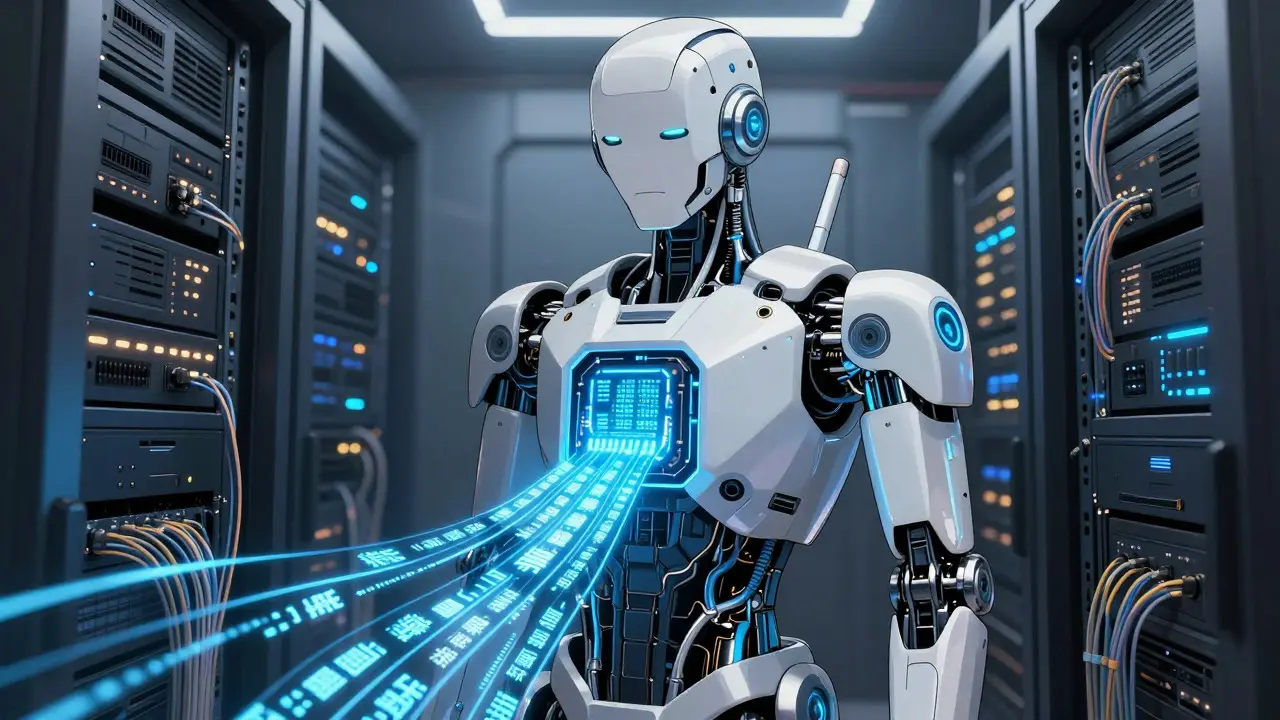
Imagine you are teaching a child to understand the world. You can either show them thousands of pictures first, helping them learn shapes and colors before they learn words. Or, you can teach them to read and write fluently, then introduce images as illustrations to their stories. In the world of artificial intelligence, this is exactly the debate raging right now between vision-first and text-first pretraining for multimodal large language models (MLLMs).
By mid-2026, most enterprise AI systems rely on the text-first approach. It’s faster, easier to integrate, and leverages the massive progress made in pure language models. But if your goal is deep visual reasoning-like diagnosing medical scans or inspecting manufacturing defects-the text-first path might be holding you back. Understanding these two architectural paths isn’t just academic; it determines whether your AI sees an image as data or just as a caption waiting to happen.
The Dominance of Text-First Architectures
The text-first approach is currently the industry standard. According to Rohit Bandaru’s analysis from early 2025, 92% of state-of-the-art multimodal models released between 2023 and 2024 follow this paradigm. Models like Meta’s Llama 3.2 Vision, Alibaba’s Qwen2.5-VL, and Microsoft’s Phi-4 Multimodal all start with a powerful, pre-trained Large Language Model (LLM). The vision capabilities are added later, essentially treating the image as another form of input that needs to be translated into text tokens the LLM already understands.
This method works because the foundation-the language model-is incredibly robust. When you add vision to an existing LLM, you benefit from years of optimization in natural language processing. Kaitchup’s September 2025 study showed that these models suffer only a 2.3% average performance drop in text-only tasks compared to their base versions. That means your chatbot still writes great code and answers questions accurately, even after learning to see.
From an implementation standpoint, text-first models are a developer’s best friend. If your team knows how to deploy LLMs, adding vision requires minimal retraining. Lightly AI’s October 2025 survey found that developers familiar with LLMs could get up and running with text-first models in 30 to 40 hours. Compare that to 60-80 hours for vision-first models, which require specialized computer vision expertise. Plus, community support is stronger: 82% of GitHub issues for text-first models receive responses within 48 hours, versus just 57% for vision-first alternatives.
The Promise of Vision-First Pretraining
While text-first dominates commerce, vision-first pretraining is winning hearts in research labs. This approach starts with a strong vision model, such as a Vision Transformer (ViT), and incrementally adds language capabilities. Microsoft’s BEiT-3 is a prime example, achieving state-of-the-art results across seven major benchmarks including COCO and VQAv2 by prioritizing visual understanding from day one.
Why does this matter? Because text-first models often compress visual information into linguistic tokens, potentially losing critical spatial details. Dr. Rohit Bandaru noted that this creates a "natural language bottleneck." Vision-first models avoid this by maintaining rich visual semantics. In complex visual reasoning tasks, like analyzing charts or scientific diagrams, vision-first models score 18.7% higher than their text-first counterparts on benchmarks like ChartQA.
Consider a healthcare scenario. A financial services company using a text-first model achieved 89% accuracy in document understanding but needed 47% more fine-tuning data than expected. Conversely, a healthcare provider using a vision-first model called MedViLL hit 93% accuracy in medical image analysis while using 31% less domain-specific data. For specialized domains where visual nuance is everything, starting with vision pays off.
Technical Trade-offs: Speed, Memory, and Accuracy
Choosing between these paths involves hard technical trade-offs. Let’s look at the numbers.
| Metric | Text-First (e.g., Llama 3.2 Vision) | Vision-First (e.g., BEiT-3, BLIP) |
|---|---|---|
| VRAM Usage (8B params) | 25.1 GB | ~19.2 GB (Base ViT equivalent) |
| Inference Speed | ~2,500 tokens/sec (A100 GPU) | Variable, generally slower due to alignment complexity |
| Visual Reasoning (ChartQA) | Lower (18.7% gap) | Higher |
| Language Generation Quality | High (2.3% degradation from base) | Moderate (7.8% degradation) |
| Training Data Efficiency | Requires more data | 37% less data needed for comparable performance |
Text-first models are heavier. Lightly AI’s benchmarks showed that a Llama-3-8B Vision model required 25.1GB of VRAM, compared to 19.2GB for the base text-only version. That’s a 30% increase in memory usage for equivalent parameter counts. However, they are fast. Using vLLM, these models can process nearly 2,500 tokens per second on a single A100-40G GPU. DeepSeek-VL2 even introduced dynamic tiling strategies that compress visual contexts by up to 20x while keeping OCR accuracy above 97%.
Vision-first models, on the other hand, are lighter on resources during training but struggle with language generation. They typically process images at lower resolutions (224x224) compared to text-first models that handle up to 448x448. While they excel at seeing, their ability to explain what they see in natural language is still maturing. As Microsoft Research Director Dr. Xuedong Huang stated, vision-first architectures represent the future of genuine multimodal understanding, but current implementations suffer from immature language generation.
Real-World User Experiences and Pain Points
Benchmarks tell one story, but user experiences reveal the daily reality. On Reddit’s r/MachineLearning, users frequently discuss the "image blindness" phenomenon in text-first models. One thread documented that 41% of users reported models ignoring visual elements entirely when textual descriptions were present. Essentially, the model reads the caption and ignores the picture because the language pathway is so dominant.
For general business applications, this doesn’t matter much. Enterprise reviews on G2 showed text-first models receiving 4.2/5 ratings for general use cases. But switch to specialized domains, and the tables turn. In manufacturing quality control, vision-first models scored 4.5/5, while text-first approaches lagged at 3.9/5. Users processing multi-panel comics or scientific diagrams reported that 62% faced difficulties with text-first models failing to parse complex layouts.
Integration effort is another major pain point. A Reddit user identified as 'AI_Engineer_2025' reported 35% faster implementation times with text-first models due to compatibility with existing LLM tooling. Meanwhile, 'VisionML_Researcher' noted that vision-first models required 2.3x more engineering effort to integrate but delivered superior performance on medical imaging tasks. If you have a mature MLOps pipeline built around LLMs, switching to vision-first feels like rebuilding the house while living in it.
The Rise of Hybrid Approaches in 2026
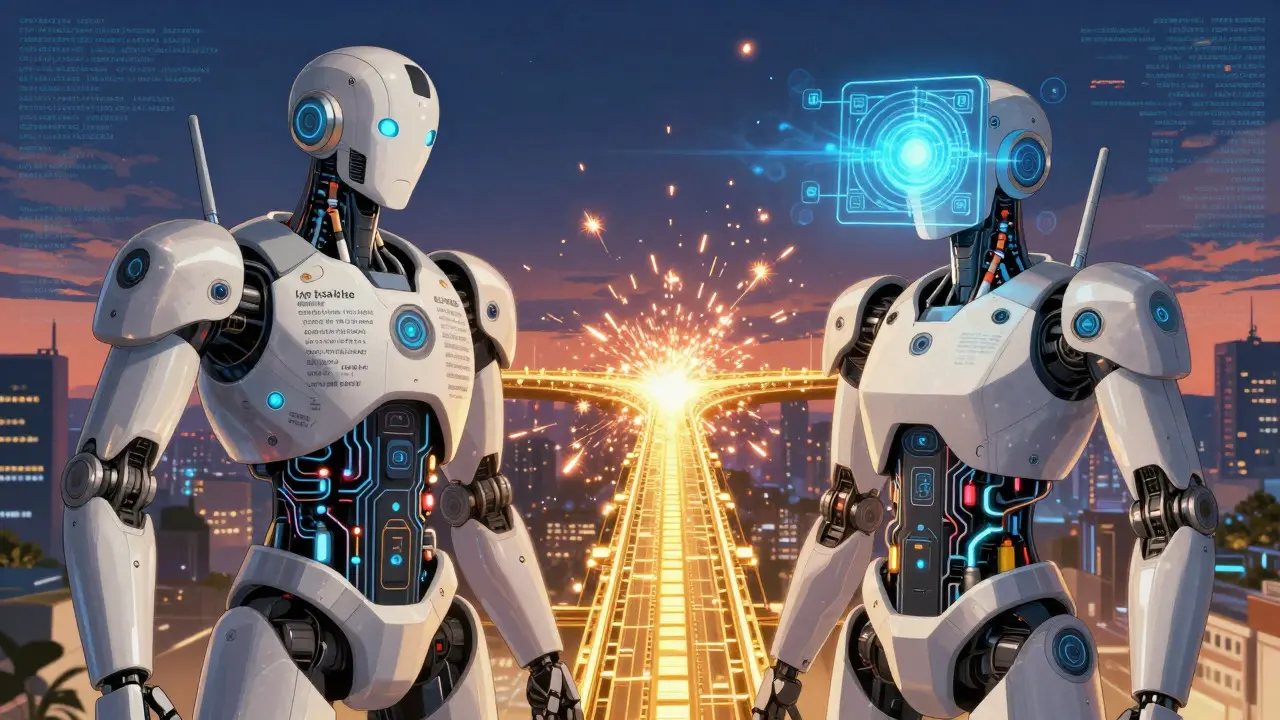
Neither approach is perfect, which is why the industry is moving toward hybridization. Gartner’s October 2025 report predicts that 78% of AI leaders are exploring hybrid models for their 2026 roadmaps. These architectures aim to combine the strong language grounding of text-first models with the deep visual perception of vision-first systems.
We are already seeing signs of this shift. Meta’s planned Llama-4-Vision release in Q1 2026 promises improved vision-language alignment mechanisms, effectively bridging the gap. Similarly, Microsoft’s BEiT-4, scheduled for Q2 2026, focuses on enhancing language generation capabilities within a vision-first backbone. By Q4 2026, analysts predict that 65% of multimodal models will incorporate elements of both paradigms.
Regulatory pressures are also shaping this evolution. The EU AI Act’s November 2025 update specifically addresses multimodal systems, requiring 32% more validation testing for vision-first systems in high-risk applications. This regulatory friction might slow the adoption of pure vision-first models in Europe, further pushing enterprises toward hybrid solutions that balance compliance with capability.
How to Choose the Right Path for Your Project
So, which one should you pick? It depends on your primary job-to-be-done.
- Choose Text-First if: You need rapid deployment, strong natural language generation, and integration with existing LLM ecosystems. Ideal for customer service bots, content creation assistants, and general document analysis.
- Choose Vision-First if: Visual accuracy is paramount and language output is secondary or structured. Ideal for medical imaging diagnostics, manufacturing defect detection, and satellite imagery analysis.
- Wait for Hybrids if: You need both high-fidelity visual reasoning and fluent natural language explanation, and can afford a longer development timeline.
If your team lacks computer vision expertise, stick with text-first. The learning curve is significantly shorter, and the ecosystem support is vast. But if you are building a specialized tool where missing a visual detail costs money or lives, invest in the extra engineering effort required for vision-first or hybrid architectures.
What is the main difference between vision-first and text-first pretraining?
Text-first pretraining starts with a large language model and adds vision capabilities later, treating images as inputs to be translated into text. Vision-first pretraining begins with a vision model (like a Vision Transformer) and adds language processing capabilities subsequently, prioritizing visual understanding from the start.
Which approach is better for medical imaging?
Vision-first approaches are generally better for medical imaging. Case studies show that vision-first models like MedViLL achieve higher accuracy (93%) with less training data (31% less) compared to text-first models in specialized visual domains where spatial detail is critical.
Do text-first models ignore images?
Yes, this is known as "image blindness." About 41% of users report that text-first models may ignore visual elements if textual descriptions are present, because the language pathway dominates the decision-making process.
How much more VRAM do text-first models require?
Text-first models typically require about 30% more VRAM for equivalent parameter counts. For example, a Llama-3-8B Vision model uses 25.1GB of VRAM compared to 19.2GB for the base text-only model.
Will hybrid models replace both approaches?
Hybrid models are predicted to capture 65% of the market share by Q4 2026. They combine the strong language grounding of text-first models with the deep visual perception of vision-first systems, addressing the weaknesses of both pure approaches.
Which companies lead in text-first multimodal models?
Meta, Alibaba, and Microsoft lead the text-first space with a combined 58% market share. Their models include Llama 3.2 Vision, Qwen2.5-VL, and Phi-4 Multimodal, respectively.
Is vision-first pretraining suitable for general chatbots?
Generally no. Vision-first models suffer from a 7.8% average performance drop in text generation tasks, making them less ideal for general-purpose chatbots where fluent language interaction is the primary requirement.
om gman
lol right because reading pictures is so hard why dont we just make them read books first lol
Jeanne Abrahams
In South Africa, we have a saying: you cannot teach an old dog new tricks if you keep feeding it bones instead of meat. This entire debate feels like watching two children argue over who gets to drive the car while the engine is still on fire. The industry is obsessed with speed, with getting the chatbot to answer questions before it can even see what is in front of it. It is deeply ironic that we claim to build intelligent systems yet ignore the most basic aspect of intelligence: observation. I find it amusing that European regulations are now catching up to what common sense has always dictated. Perhaps if we slowed down and looked at the world through the lens of the image first, we might actually understand what we are building. But no, let us rush toward Q4 2026 with our hybrid compromises and call it progress. Typical.
Bineesh Mathew
The soul of the machine is trapped in a cage of text. We seek to give sight to the blind but only after they have learned to speak. It is a moral failing of our age that we value fluency over truth. When a model ignores the image because the caption is sufficient, it is not efficiency; it is cowardice. The vision-first approach demands humility, a willingness to stare into the abyss of raw data without the safety net of language. Only then can true understanding emerge from the chaos. Those who cling to text-first methods are clinging to their own ego, their desire to be heard rather than to see. The future belongs to those who can look without speaking. Everything else is noise.
Oskar Falkenberg
I mean i totally get where everyone is coming from but like honestly isnt it kind of cool how both sides have valid points? i know i sound like a bit of a waffler but when you think about it the text first stuff is super easy to integrate which is great for small teams who dont have massive budgets for gpus or specialized cv engineers. on the flip side though the vision first stuff does seem way better for like actual seeing things properly which is obviously important if you are doing medical scans or whatever. maybe the hybrid thing is the real winner here? i suppose it depends on what your team is good at really. if you are already doing llms then sticking with text first makes sense until you hit a wall. its all about trade offs i guess and finding the sweet spot for your specific use case rather than trying to win a theoretical argument about which one is objectively superior in every single scenario possible.
Caitlin Donehue
I've been quietly observing these benchmarks for months now. It's interesting how the narrative shifts depending on who you ask. The developers love text-first because it fits their existing workflows. The researchers love vision-first because it pushes the boundaries of what's possible. I wonder if the average user even notices the difference unless they are specifically looking for it. Maybe the 'image blindness' isn't as prevalent as the studies suggest, or perhaps it's just a niche problem that gets amplified in academic circles. Time will tell which approach actually sticks in the long run.
Stephanie Frank
Look at the data. Stop crying about how hard it is to learn computer vision. If your team can't handle a vision-first model, you aren't qualified to build enterprise AI. The 30% VRAM increase for text-first is a joke. You are paying for inefficiency. The 18.7% gap in visual reasoning is not a statistic; it is a verdict. Text-first models are lazy. They cheat. They rely on the crutch of language to hide their visual incompetence. If you want accuracy, you pay the price. If you want excuses, stick with Llama. Simple as that. The rest of you are just making excuses for bad engineering.
Patrick Dorion
It's fascinating to consider the philosophical implications of these architectural choices. Are we defining intelligence by its ability to communicate or by its ability to perceive? The text-first approach assumes that language is the ultimate container of meaning, that everything can be reduced to words. But vision-first suggests that there is a pre-linguistic layer of understanding that is more fundamental. In my experience working with both, the vision-first models feel more 'present' in the moment, while text-first models feel like they are reciting a script. Neither is perfect, but the direction of travel seems clear. We are moving towards a synthesis, but the foundation must be built on perception, not description.
Marissa Haque
Oh my goodness! Can we please talk about the sheer drama of this situation?! It is absolutely wild that people are still arguing about this in 2026! I mean, come on! The hybrid models are literally right around the corner! Why are we still stuck in the past?! It is like watching a soap opera where the characters refuse to move on to the next season! And don't even get me started on the VRAM usage! Twenty-five gigabytes?! For what?! Just to write code?! I am shaking my head! We need to embrace the future! We need to stop being so stubborn! Let us all just agree that hybrids are the way forward and move on with our lives! Please!
Keith Barker
the dichotomy is false. perception and language are not separate entities they are intertwined. the attempt to separate them in training regimes is an artificial constraint imposed by current hardware limitations. we should not choose between vision and text we should seek a unified representation that transcends both. the current models are stumbling blocks on the path to true general intelligence. patience is required.