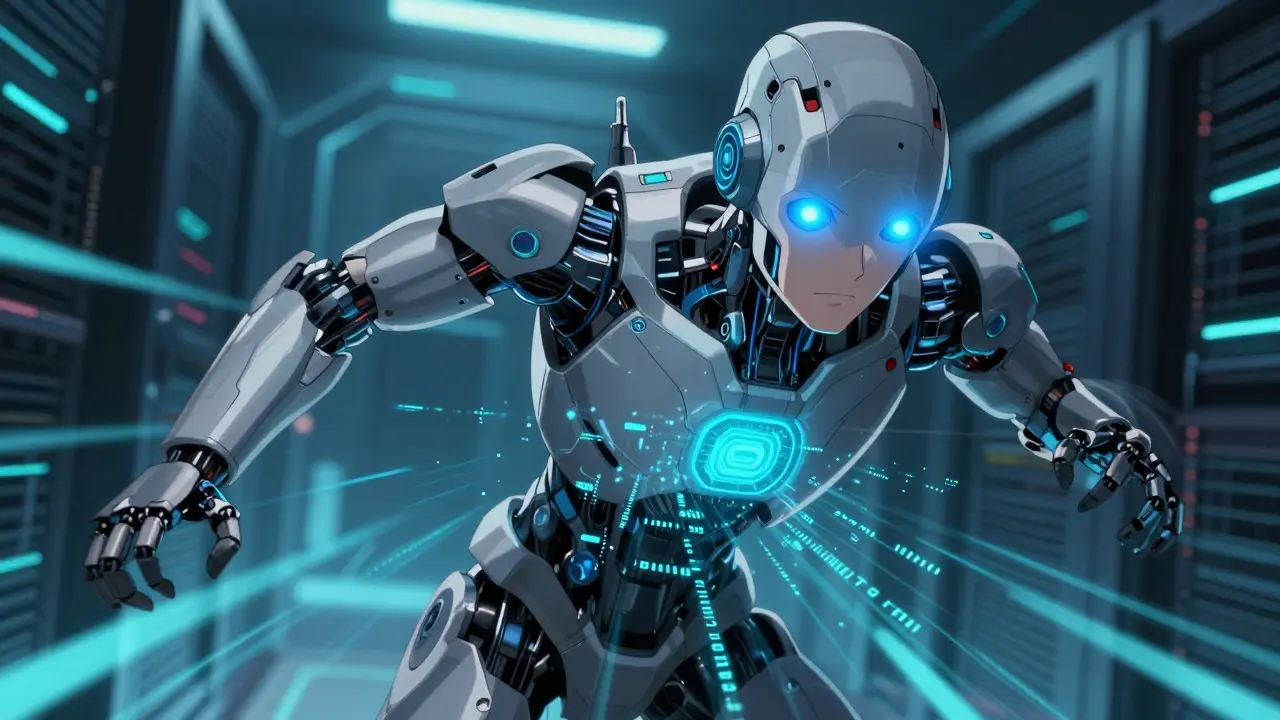
Have you ever watched a chatbot type out an answer word by word, only to realize halfway through that it was completely wrong? Or perhaps you’ve waited ten seconds for a full paragraph to appear, only to find it perfectly accurate. This tension between speed and correctness is the defining challenge of modern Generative AI interfaces. The way these models deliver information-either as a continuous stream or a single batched response-does more than just affect how fast you get an answer. It fundamentally changes the likelihood of errors, known as hallucinations, which are fabricated facts presented as truth, and dictates how users perceive the system’s reliability.
The Mechanics of Delivery: Streaming vs. Batch Processing
To understand why one method might be better than the other, we first need to look at how large language models (LLMs) actually generate text. These models don't write sentences; they predict tokens. A token can be a word, part of a word, or even punctuation. The model calculates the probability of the next token based on all previous tokens and the original prompt.
In a batch processing approach, the server waits until the entire response is generated before sending anything to your screen. This means the model completes its internal reasoning process, checks its own logic (if configured to do so), and compiles the final output. You see nothing until the work is done.
In contrast, streaming responses send each token to the client as soon as it is predicted. If the model predicts "The capital of France is...", those words appear instantly. The next token, "Paris," appears milliseconds later. This creates the illusion of real-time conversation.
| Feature | Streaming Response | Batch Response |
|---|---|---|
| Perceived Latency | Low (starts immediately) | High (waits for completion) |
| Actual Time to Complete | Same as batch (model speed) | Same as streaming (model speed) |
| User Interaction | Can interrupt early | Must wait for full response |
| Error Visibility | Immediate but potentially incomplete | Hidden until end |
| Hallucination Risk | Higher perceived risk due to lack of post-processing | Lower if self-correction steps are included |
Does Streaming Increase Hallucination Risk?
This is the million-dollar question for developers and users alike. The short answer is: not directly, but indirectly, yes. The core generation engine-the neural network-is identical whether you stream the output or hold it back. The model doesn't know if you're watching it type or waiting for the final product.
However, the *architecture* surrounding the model often differs. In a batch scenario, engineers frequently insert intermediate steps between generation and delivery. For example, a system might generate a draft, run a quick factual verification check against a knowledge base, and then send the corrected version. This "self-consistency" or "verification" step requires the full context, which is impossible with pure streaming unless the stream is buffered anyway.
When you stream, you are typically seeing the raw, unfiltered output of the model's first guess. If the model starts down a logical path that leads to a hallucination, you see that error unfold in real-time. There is no safety net of post-generation editing. Furthermore, because streaming feels faster, users tend to trust the initial words more quickly, cementing incorrect information in their minds before they have a chance to question it.
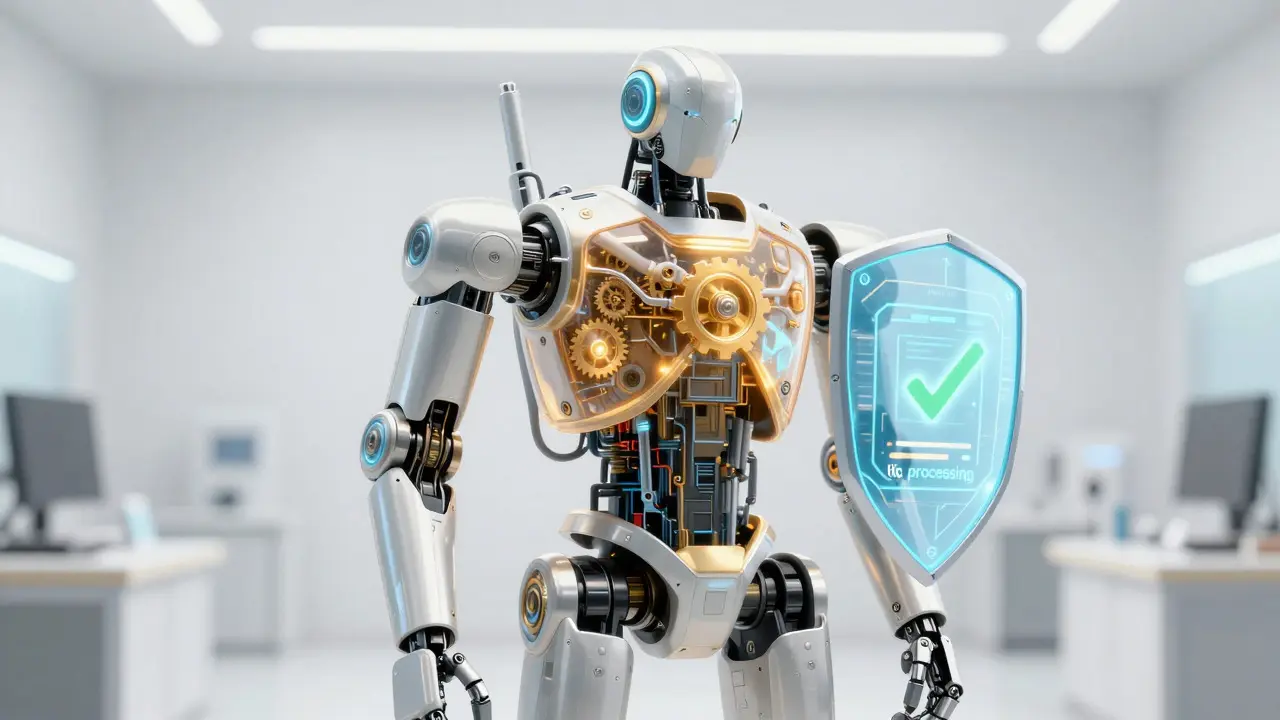
The User Experience Factor: Patience vs. Perception
User experience (UX) in AI isn't just about accuracy; it's about psychological comfort. Human attention spans are short. Research in human-computer interaction suggests that if a system takes longer than 100 milliseconds to respond, users perceive a delay. If it takes over two seconds, they lose focus entirely.
Batch responses violate this rule. Waiting 5 to 10 seconds for a complex query to resolve feels like an eternity. Users assume the system is broken or slow. They might refresh the page, abandon the task, or simply lose confidence in the tool.
Streaming solves this by providing immediate feedback. Even if the total time to generate the answer is 8 seconds, the fact that the first word appears in 0.5 seconds makes the experience feel responsive. This is known as "perceived performance." The user feels engaged because they can read along, anticipate the ending, or even stop the generation if they see it going off-track.
But there's a catch. If the stream is too fast, users may skim without reading carefully, missing nuances. If it's too slow, the typing effect becomes annoying rather than helpful. Finding the right token-per-second rate is a delicate balance in UI design.
Accuracy Trade-offs in Complex Reasoning
Let's look at a specific use case: coding assistance. Imagine asking an LLM to debug a Python script. In a batch mode, the model might generate the code, then internally simulate running it (a technique called Chain-of-Thought execution), identify a syntax error, and correct it before showing you the result. You get a clean, working solution. In a streaming mode, you see the code being written. You see the bug appear. You might think, "Ah, I see the mistake," and feel empowered to fix it yourself. But you also bear the cognitive load of verifying the output. The responsibility shifts from the system to the user.
For creative writing, this shift is acceptable. A hallucinated metaphor in a poem is less dangerous than a hallucinated drug dosage in medical advice. Therefore, streaming is ideal for brainstorming, drafting emails, or casual chat. Batch processing is superior for high-stakes tasks where accuracy is non-negotiable, such as legal analysis, financial reporting, or medical diagnostics.
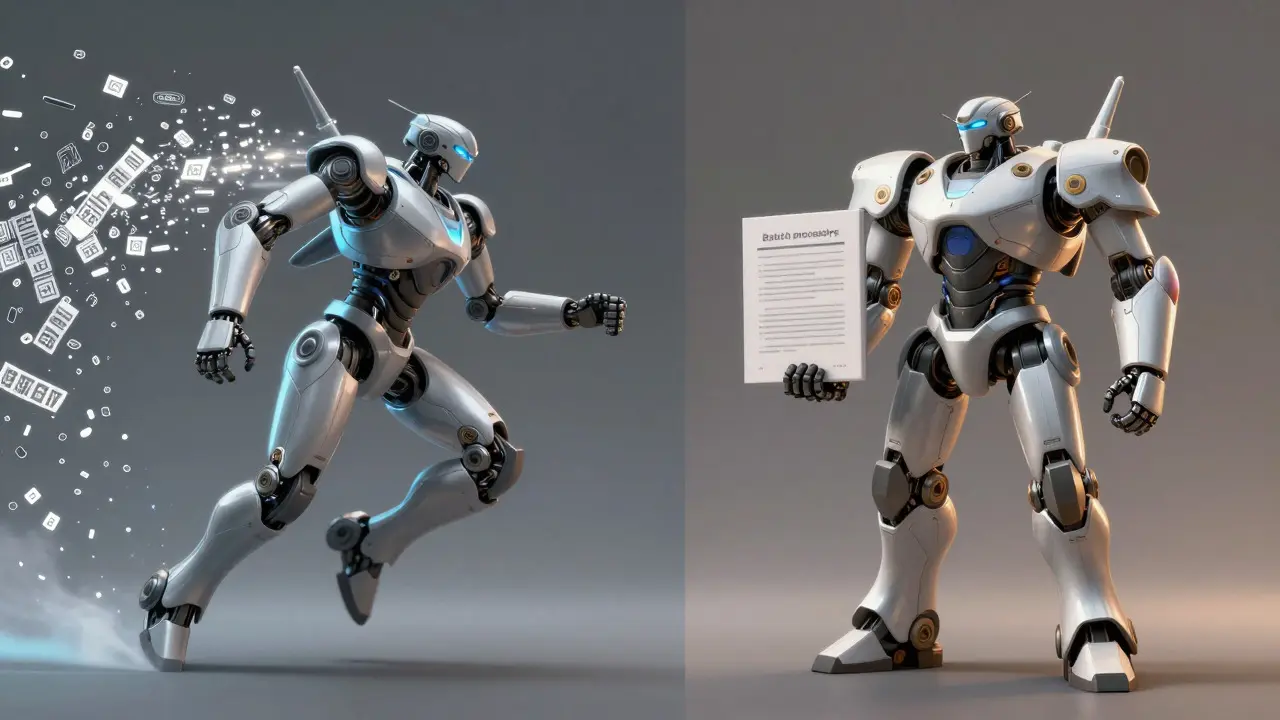
Hybrid Approaches: Getting the Best of Both Worlds
Smart platforms don't force a binary choice. They use hybrid strategies. One common pattern is "stream-with-buffer." The system generates the response in batches of small chunks (e.g., every 3-5 tokens) rather than every single token. This reduces server load and allows for minor consistency checks without sacrificing the feeling of immediacy.
Another approach is progressive disclosure. The system streams a high-level summary or outline first. Once that is complete, it proceeds to fill in the details in subsequent streams. This helps users grasp the structure and intent before diving into the potentially hallucinatory details. If the outline looks wrong, the user can abort before wasting time reading the full elaboration.
Decision Framework for Developers
How do you choose? Consider these three factors:
- Tolerance for Error: If a wrong answer causes financial loss or safety risks, prioritize batch processing with verification layers. If the cost of error is low, stream freely.
- Complexity of Task: Simple queries ("What is the weather?") benefit from streaming. Complex reasoning ("Compare these two economic policies") benefits from batch processing to allow for deeper internal coherence checks.
- User Expectations: Chatbots should stream. Report generators should batch. Match the interface to the mental model of the user.
Ultimately, the goal is not just speed or accuracy in isolation, but trust. Streaming builds trust through transparency-you see the thinking process. Batch builds trust through competence-you get the right answer. Understanding when to use each is key to building effective AI applications.
Does streaming make AI models less intelligent?
No. The underlying model weights and reasoning capabilities remain the same. Streaming only affects how the output is delivered to the user, not how the model processes information internally.
Why do some AI apps switch from streaming to batch?
Apps may switch to batch for complex tasks requiring high accuracy, such as code compilation or mathematical proofs, to allow for internal self-correction steps that are difficult to perform while streaming live data.
Can you reduce hallucinations in streaming responses?
Yes, by using techniques like retrieval-augmented generation (RAG) where the model accesses external facts in real-time, or by implementing client-side validation that highlights uncertain claims as they appear.
Is batch processing slower than streaming?
The actual computation time is identical. However, batch processing has higher *perceived* latency because the user sees nothing until the entire response is ready, whereas streaming shows progress immediately.
Which method is better for mobile devices?
Streaming is generally better for mobile because it uses less memory (no need to buffer the whole response) and provides immediate feedback, which is crucial on smaller screens with limited attention span.
Andrea Alonzo
I really appreciate how this post breaks down the nuances between streaming and batch processing because it highlights that there is no one-size-fits-all solution for every user scenario. It is fascinating to consider how the psychological comfort of a user is just as important as the raw accuracy of the data, especially when we are dealing with complex reasoning tasks where errors can have significant consequences. The point about perceived latency versus actual completion time is something that many developers overlook until users start complaining about the interface feeling sluggish or unresponsive.
Oskar Falkenberg
yeah i totally agree with the bit about perceived performance its crazy how much better things feel when you see text appearing even if it takes the same amount of time overall. i noticed this when using some coding assistants lately where they stream the code and you can kinda follow along but sometimes you wish it would just wait till the end so it doesnt show you half broken syntax before fixing it in the next line. also the typo prone nature of my typing reflects how i probably read these streams quickly without checking every detail which is exactly what the article warns about.
om gman
oh look another tech bro trying to explain basic computer science concepts like they invented them lol. streaming vs batch has been a debate since the dawn of http/1.1 and yet here we are pretending this is some new frontier of ai innovation. the real issue is that most devs cant write proper async handlers so they blame the model architecture instead of their own incompetence. drama queen alert: who cares about hallucinations when the server crashes under load anyway?
Saranya M.L.
The epistemological framework presented herein lacks sufficient rigor regarding the ontological status of token prediction probabilities. While the author attempts to delineate the operational differences between streaming and batch modalities, they fail to account for the inherent stochasticity of transformer-based architectures which necessitates a more robust verification layer regardless of delivery mechanism. Furthermore, the assertion that streaming increases hallucination risk is a gross oversimplification that ignores the nuanced interplay between attention mechanisms and contextual window limitations. One must consider that the cognitive load imposed upon the user during streaming interactions may actually exacerbate the perception of error rather than mitigating it through immediate feedback loops.
Bineesh Mathew
We stand at the precipice of a moral abyss where our reliance on instantaneous gratification blinds us to the subtle decay of truth itself. To stream is to embrace chaos, to let the raw id of the machine bleed onto the screen without the superego of verification to temper its wild impulses. Is it not a reflection of our own societal impatience that we prefer the lie told quickly over the truth arrived at slowly? We are building gods out of silicon and demanding they speak in tongues we do not understand, all while ignoring the profound silence that might hold the answers we seek. The drama of the blinking cursor is merely a distraction from the void staring back.
Stephanie Frank
honestly this whole discussion is just corporate fluff designed to sell more compute resources. nobody cares about your hybrid approaches or progressive disclosure when the bot tells you your dog is a cat. the toxicity of these systems comes from the fact that they sound so confident while being completely wrong. stop making excuses for bad engineering and just fix the models instead of playing games with ui tricks.
Patrick Dorion
From a philosophical standpoint, the distinction between streaming and batch processing mirrors the ancient debate between process and product. When we stream, we engage with the thinking process itself, witnessing the construction of meaning in real-time. This transparency can be empowering, allowing us to intervene and guide the narrative, but it also places the burden of interpretation squarely on our shoulders. In contrast, batch processing offers a finished artifact, a completed thought that demands acceptance rather than collaboration. Perhaps the ideal interface would allow us to toggle between these modes based on our desired level of engagement with the machine's cognition.
Caitlin Donehue
i wonder if the speed of the stream affects how much people trust the answer. like if it types super fast do we assume it knows what it is talking about or does it seem too rushed? i usually just skim these responses anyway so maybe the format doesnt matter as much as the content itself.
Jeanne Abrahams
Right, because nothing says 'trustworthy AI' like watching it type out a lie word by word in front of your eyes. Oh wait, that's just life in South Africa where the internet cuts out mid-sentence anyway. But seriously, the idea that we need to choose between looking smart and being right is ridiculous. Give me the slow, accurate answer every time. I'd rather wait ten seconds than have to fact-check a paragraph of nonsense generated in three seconds flat.
michael rome
This is a very thoughtful analysis of the trade-offs involved in modern AI interfaces. It is crucial that we remain empathetic to the user experience while maintaining high standards for accuracy. The decision to stream or batch should always prioritize the well-being and understanding of the end-user.