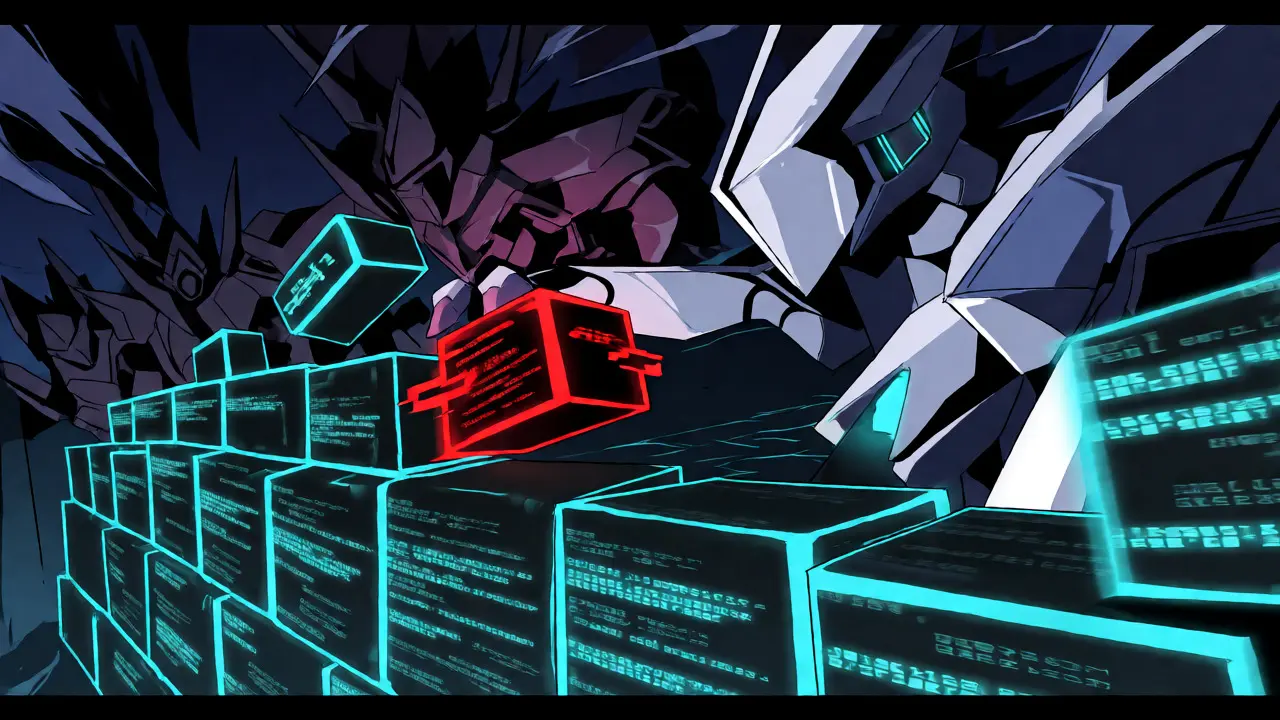
You asked an AI to build a login system. It spat out code in seconds. You merged it. Two days later, your database is public because the AI hallucinated a package name that didn't exist, and some clever attacker registered it first. This isn't hypothetical; it's the new reality of vibe coding, a development practice where developers use conversational prompts to generate code via AI assistants. The speed is intoxicating, but the risk profile has shifted dramatically. Traditional code review assumes a human wrote the code with intent. AI doesn't have intent; it has probability. That means branch protection can no longer just check if tests pass. It needs to act as a forensic gatekeeper.
If you're managing repositories in 2026, relying on manual reviews for AI-generated commits is like trying to catch bullets with chopsticks. You need automated, multi-layered defense mechanisms baked directly into your branching strategy. Here is how you lock down your repos against the specific chaos that AI introduces.
The Hallucination Problem: Why Standard Reviews Fail
When a junior developer writes bad code, they usually make logical errors or syntax mistakes. When an AI model generates code, it often makes plausible errors. It might suggest a library that sounds real but doesn't exist. Or worse, it suggests a library that exists but is unmaintained or compromised. Attackers know this. They watch what popular LLMs are recommending and register those names before anyone else does. This is called typosquatting, and it’s exploding in the age of AI.
Standard CI/CD pipelines often miss this because they assume dependencies are stable. But in vibe-coded repos, dependencies change constantly based on prompt variations. If your branch protection rules don't explicitly verify that every new dependency is vetted against known registries and cooldown periods, you’re opening a door to supply chain attacks. The Shai-Hulud campaigns in 2025 proved that fresh packages are prime targets. By the time a public advisory drops, the damage is done. Your branch protection must block merges from any pull request introducing a package published less than 48-72 hours ago unless manually approved by a security engineer.
Implementing Multi-Stage Scanning Gates
You can’t rely on one scanner. AI code triggers different vulnerabilities than human code. You need a pipeline that runs distinct checks at the pull request level, blocking the merge until all gates pass. Think of this as a bouncer checking IDs, bag contents, and dress code before letting anyone in.
First, you need Static Application Security Testing (SAST). Tools like Semgrep or CodeQL are essential here. Configure them specifically for OWASP Top Ten categories, but add custom rules for patterns AI loves to mess up: SQL injection via string concatenation, missing input validation, and insecure cryptographic defaults. AI often forgets to sanitize inputs because it focuses on functionality over security.
Second, implement Software Composition Analysis (SCA). This scans your dependency tree. Use tools like Snyk or Trivy. Crucially, configure these to fail builds not just on critical vulnerabilities, but on unknown licenses or transitive dependencies introduced by AI-suggested libraries. If the AI adds a package that pulls in ten others, your SCA tool should flag that blast radius.
Third, never skip secrets scanning. AI models sometimes hardcode API keys or tokens found in training data or context windows. Run Gitleaks or GitGuardian on every commit. If a key leaks into a feature branch, it stays there forever unless you scrub it. Make this a hard block-no exceptions for "temporary" keys.
| Layer | Primary Tool Examples | Target Vulnerability | Action on Failure |
|---|---|---|---|
| SAST | Semgrep, CodeQL | SQL Injection, XSS, Path Traversal | Block Merge |
| SCA | Snyk, Trivy | Vulnerable Dependencies, License Issues | Block Merge |
| Secrets | Gitleaks, GitGuardian | Hardcoded API Keys, Tokens | Block Merge |
| Supply Chain | StepSecurity, Socket.dev | Typosquatting, Fresh Package Risks | Require Approval |

Enforcing Database and Permission Hygiene
One of the most dangerous habits of AI-generated code is overly permissive defaults. Ask an AI to set up a database connection, and it will likely give you full admin access or disable Row Level Security (RLS) to "make it work quickly." In production, this is catastrophic. The recent incidents involving platforms like Lovable highlighted how AI-generated configs shipped without proper access controls, exposing user data to anyone with the right URL.
Your branch protection rules must enforce architectural constraints. For example, if you’re using PostgreSQL or Supabase, require that every table creation migration includes explicit RLS policies. You can write custom linters or scripts that run in CI to check for `ENABLE ROW LEVEL SECURITY` statements in migration files. If they’re missing, the build fails. Don’t trust the AI to remember this; force it through the pipeline.
Similarly, watch out for IAM roles. AI assistants tend to request broad permissions like `*:*` or `AdministratorAccess` when setting up cloud resources because it’s the path of least resistance. Your infrastructure-as-code (IaC) checks should scan Terraform or CloudFormation templates for wildcard permissions. If a pull request introduces a role with `Action: *`, block it. Require specific actions like `s3:GetObject` instead. This forces the developer-or their AI assistant-to think about least privilege.
The Role of Cooldown Policies and Human Oversight
Automation catches the obvious stuff. But for vibe-coded repos, you need a human-in-the-loop mechanism for high-risk changes. Enter cooldown policies. These rules prevent newly published npm packages from being installed immediately. Most supply chain attacks exploit the window between publication and community scrutiny. By enforcing a 48-hour cooldown on new dependencies, you give the ecosystem time to detect malicious updates.
However, you can’t automate everything. Establish a policy where certain directories or file types require mandatory human review. For instance, any changes to authentication middleware, payment processing logic, or core security configurations must be approved by a senior engineer. The AI can draft the code, but a human must sign off on the logic. This isn’t about distrust; it’s about accountability. AI doesn’t understand business context. It doesn’t know that your "admin" role shouldn’t have delete permissions on production data during peak hours. A human does.
To make this scalable, use tools that provide context-aware summaries. Instead of showing a diff of 500 lines, show a summary: "AI added OAuth integration using package X, modified auth middleware, and updated environment variables." This helps reviewers focus on the structural changes rather than getting lost in syntax details.

Isolating the Blast Radius
Even with perfect branch protection, things slip through. What happens when a compromised package makes it to staging? You need isolation. Implement egress control policies that restrict outbound traffic from your CI/CD runners. Many AI coding agents operate in environments without built-in network firewalls. If a malicious package tries to phone home with your source code, you want to stop it at the DNS or HTTPS layer.
Tools like Cloudflare Zero Trust or NGINX can gate entry points, but for CI/CD, look into process attribution. This traces every network call back to the exact process ID that made it. If a Node.js script suddenly tries to connect to an unfamiliar IP address during a test run, your system should flag it. Generic endpoint protection often misses this in containerized environments. Process-level visibility is your safety net.
Also, consider local monitoring on developer machines. Since vibe coding often starts locally before hitting the repo, detecting compromised packages early saves headaches. Some platforms now offer remote removal capabilities across entire organizations, reducing the blast radius within minutes. If an AI agent installs a bad package on your laptop, it shouldn’t take weeks to find out.
Balancing Velocity and Rigor
The biggest pushback against strict branch protection is speed. Developers hate waiting for scans. But in 2026, the cost of a security incident far outweighs the cost of a five-minute delay. To keep velocity high, optimize your scanning pipeline. Run lightweight checks pre-commit (like secret detection) and heavier scans (like SAST/SCA) only on pull requests. Cache results where possible. Only rescan changed files.
Create clear escalation paths. If a scan fails, the error message should tell the developer exactly what to fix. "Dependency vulnerability found" is useless. "Package 'lodash' version 4.17.20 has CVE-2023-XXXX; upgrade to 4.17.21" is actionable. Reduce friction by making remediation easy.
Finally, treat AI-generated code with the same rigor as third-party dependencies. It’s not your code; it’s borrowed intelligence. Respect its limitations. Enforce style guides, linting rules, and security standards consistently. Over time, this discipline trains both your team and your AI assistants to produce cleaner, safer outputs.
What is the biggest security risk in vibe coding?
The primary risk is package hallucination and typosquatting. AI models often suggest non-existent or obscure library names. Attackers register these names with malicious code. Without strict dependency verification and cooldown policies in branch protection, these malicious packages can easily enter your codebase.
Do I still need human code reviews for AI-generated code?
Yes, especially for critical logic like authentication, payments, and database schemas. Automated scanners catch technical vulnerabilities, but humans are needed to validate business logic, architectural fit, and contextual appropriateness that AI cannot assess.
How do cooldown policies help secure repositories?
Cooldown policies block the installation of newly published packages for a set period (e.g., 48 hours). This prevents immediate exploitation of supply chain attacks, which typically target fresh packages before the community identifies malicious behavior.
Which SAST tools are best for AI-generated code?
Semgrep and CodeQL are highly effective because they allow custom rule creation. You can tailor rules to detect common AI pitfalls like string concatenation in SQL queries or missing input sanitization, which generic scanners might overlook.
Can AI self-review replace security testing?
No. While prompting AI to review its own code helps, it lacks the deterministic rigor of static analysis tools. AI self-review is probabilistic and can miss subtle vulnerabilities. Infrastructure-level enforcement via branch protection is mandatory.
Nnaemeka Anadu
you think this is new? nah its ancient history dressed in new clothes. the machine has no soul so it cant know intent. we are just feeding chaos into a box and hoping for order but its all noise. pure noise. stop pretending you understand what the code does when you barely wrote it. its like building a house with bricks that might turn into snakes at night. terrifyingly beautiful nonsense.