
You sit down to build an app. You open your prompt window. You type out a clear, vivid description of what you want-a task manager with drag-and-drop features, user authentication, and a dark mode toggle. The AI generates the code instantly. It works. But then you look at the file structure. Is it one giant script? Or is it broken into neat, separate modules? This is where vibe coding is a rapid software development approach driven by natural language prompts to AI models, focusing on intuitive flow and immediate results over strict architectural planning. Most developers assume they can just "prompt" their way to a perfect system. They can't. The underlying architecture-whether you choose a monolith or microservices-dictates whether your project scales or collapses under its own weight.
The term "vibe coding" isn’t just about feeling good while you work. It’s about leveraging Large Language Models (LLMs) to handle the heavy lifting of syntax and logic. However, LLMs have a blind spot: they struggle with long-term systemic coherence if you don’t guide them. If you ask an AI to build a complex app without defining the boundaries between components, it will likely default to a monolithic structure because it’s simpler to generate in a single context window. Understanding when to stick with that simplicity and when to force a microservice split is the difference between a hobby project and a production-ready product.
The Core Difference: Simplicity vs. Modularity
To pick the right path, you first need to understand what you’re actually building. A monolithic architecture is a unified software design where all components are interconnected and deployed as a single unit. In vibe coding, this means your AI generates one cohesive codebase. All your functions-user login, data processing, UI rendering-live together. They talk to each other directly through memory calls. It’s fast. It’s easy to debug because everything is in one place. If something breaks, you know exactly which file to look at.
On the other hand, microservices architecture is a distributed system design where an application is composed of small, independent services that communicate via APIs. Each service handles one specific job. One service manages users. Another handles payments. A third manages notifications. In a vibe coding context, this requires you to act as an orchestrator. You aren’t just prompting for code; you’re prompting for interfaces. You have to tell the AI, "Here is the API contract for the User Service. Now write the Payment Service that calls this endpoint." This adds friction upfront but pays off later.
The key distinction lies in coupling. Monoliths are tightly coupled. Change one part, and you risk breaking another. Microservices are loosely coupled. You can update the payment logic without touching the user interface. For vibe coders, this means more initial prompt engineering but far less refactoring pain as the project grows.
When to Choose a Monolith in Vibe Coding
Don’t let the hype of microservices trick you. For many projects, especially early-stage ones, a monolith is the superior choice. If you are building a prototype, a simple dashboard, or a tool for internal use, a monolith allows you to move faster. AI models excel at generating coherent code within a single context. When you keep everything in one repository, the AI has a complete picture of your variables and functions. It doesn’t get confused by cross-service dependencies.
Consider these scenarios where a monolith shines:
- Small Teams or Solo Developers: If you are the only one maintaining the code, the overhead of managing multiple services is unnecessary complexity. You don’t need distributed tracing tools or container orchestration.
- Rapid Prototyping: When you need to test a market idea in two weeks, spending days designing API contracts slows you down. A monolith lets you iterate quickly.
- Simple Data Models: If your app doesn’t have complex data relationships or high transaction volumes, a single database connected to a single backend is efficient.
- Low Latency Requirements: Internal function calls in a monolith are faster than network calls between microservices. If speed is critical and scale isn’t yet a concern, stay monolithic.
In vibe coding, this translates to fewer prompts. You can say, "Build a CRUD app for inventory management," and get a working result. Trying to force microservices here would mean manually splitting the AI’s output, writing integration tests, and setting up Docker containers for no real gain.
When to Switch to Microservices
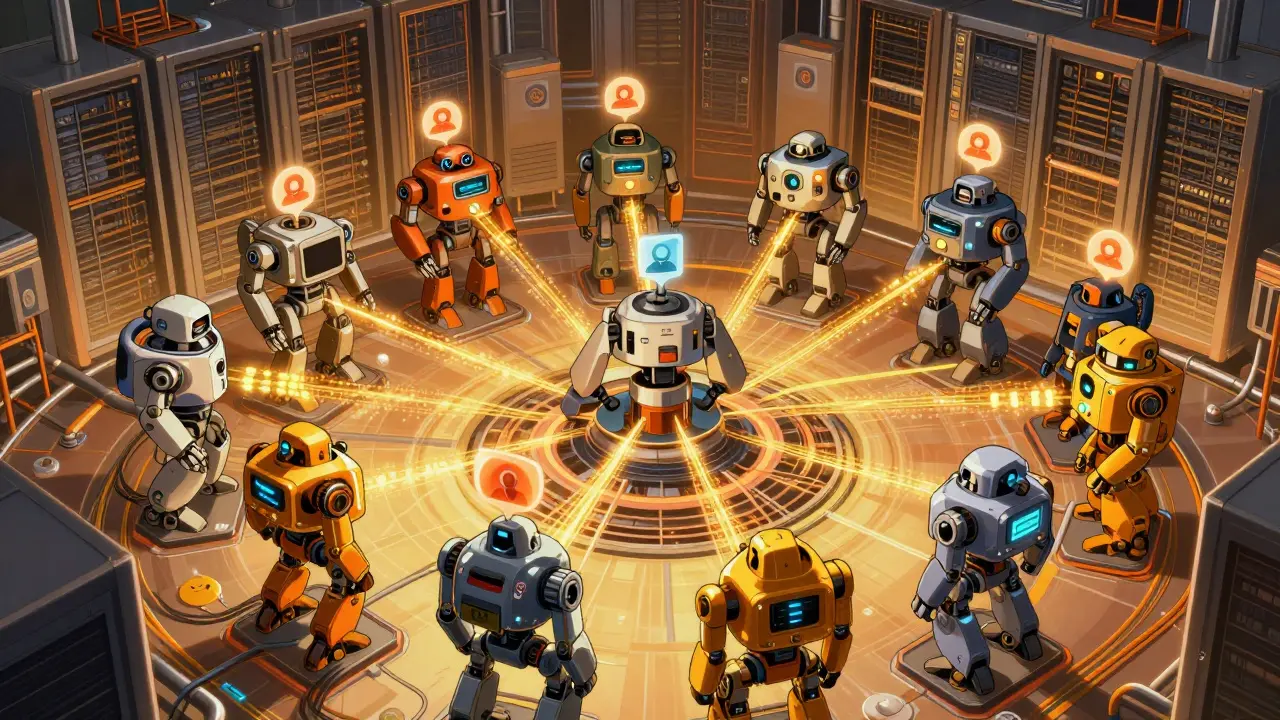
Microservices become necessary when your application hits certain thresholds. These aren’t just about traffic; they’re about complexity and team dynamics. If your vibe coding project starts attracting real users, you’ll notice bottlenecks. Maybe the image processing feature slows down the entire app because it consumes too much CPU. In a monolith, you have to scale the whole application to fix one slow part. In microservices, you scale only the image processing service.
Switch to microservices when:
- Independent Scaling Needs Arise: Different parts of your app have different resource demands. One service might need heavy GPU power, while another needs minimal RAM.
- Team Size Grows: If multiple developers are working on the same codebase, merge conflicts become a nightmare. Microservices allow teams to work on separate services without stepping on each other’s toes.
- Technology Diversity is Required: Maybe your AI recommendation engine works best in Python, but your user interface is built in JavaScript. Microservices let you mix technologies seamlessly.
- Fault Isolation is Critical: If the notification service crashes, you don’t want the entire shopping cart functionality to go down. Microservices contain failures.
For vibe coders, this shift requires a change in mindset. You stop asking the AI to "build the app" and start asking it to "design the service boundary." You must define clear inputs and outputs for each component before generating code.
The Hidden Costs of Microservices in AI-Driven Development
Microservices are not free. They introduce operational complexity that can overwhelm a solo developer or a small team. In traditional development, companies hire DevOps engineers to manage this. In vibe coding, you often are the DevOps engineer. You need to handle deployment pipelines, monitoring, and security across multiple services.
AI models can help, but they have limitations. An LLM might generate great code for a single service, but it struggles to maintain consistency across ten different services. You might end up with inconsistent error handling, varying API formats, or mismatched authentication methods. This fragmentation makes debugging harder. When an error occurs, you can’t just look at one log file. You have to trace requests across multiple services, which requires advanced tools like distributed tracing systems.
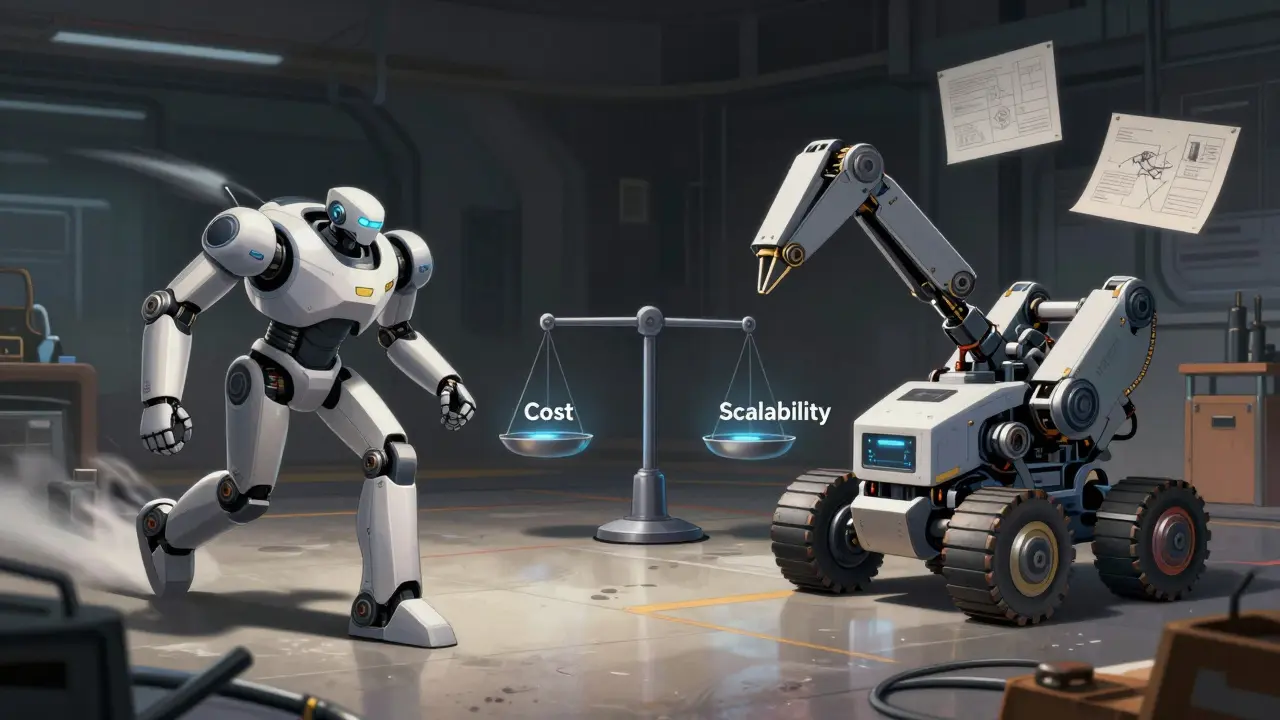
Additionally, microservices increase infrastructure costs. Each service needs its own compute resources, database connections, and networking setup. Cloud bills can skyrocket if you’re not careful. A monolith might cost $50 a month to host. A microservices architecture with proper redundancy could easily cost $500 or more. Before choosing microservices, calculate whether the scalability benefits outweigh these ongoing expenses.
Decision Framework: How to Pick Your Architecture
To make the right choice, evaluate your project against these criteria. Use this table to compare your situation against the strengths of each architecture.
| Criterion | Monolith | Microservices |
|---|---|---|
| Initial Development Speed | Fast (single context) | Slow (requires API design) |
| Scalability | Limited (scale entire app) | High (scale individual services) |
| Debugging Complexity | Low (centralized logs) | High (distributed tracing needed) |
| Team Collaboration | Poor (merge conflicts) | Excellent (isolated ownership) |
| Infrastructure Cost | Low | High |
| AI Prompt Efficiency | High (coherent context) | Medium (requires modular prompts) |
If your project scores high on "Initial Development Speed" and "Low Infrastructure Cost," start with a monolith. If you need "High Scalability" and plan to expand your team, lean toward microservices. Remember, you can always refactor a monolith into microservices later. The reverse is much harder. Start simple, add complexity only when forced by growth.
Practical Tips for Vibe Coders
No matter which architecture you choose, follow these best practices to maximize the effectiveness of AI-assisted development.
- Define Boundaries Early: Even in a monolith, organize your code into logical modules. Tell the AI, "Keep the authentication logic separate from the billing logic." This makes future migration easier.
- Use Standard Interfaces: If you go microservices, enforce strict API contracts. Ask the AI to generate OpenAPI specifications before writing implementation code. This ensures consistency.
- Automate Testing: AI-generated code can be unpredictable. Set up automated tests for every service. In microservices, integration tests are crucial to ensure services talk to each other correctly.
- Monitor Performance: Implement logging and monitoring from day one. Tools like Prometheus or Datadog help you identify bottlenecks before they become crises.
- Iterate Gradually: Don’t try to build the perfect architecture upfront. Start with a monolith, identify pain points, and extract services as needed. This "strangler fig" pattern reduces risk.
Vibe coding changes how we write code, but it doesn’t change the fundamental principles of software engineering. Good architecture still matters. By understanding the trade-offs between monoliths and microservices, you can leverage AI to build robust, scalable applications that stand the test of time.
Can I switch from a monolith to microservices later?
Yes, but it requires careful planning. You can gradually extract specific functionalities into separate services using the strangler fig pattern. However, ensure your monolith has well-defined module boundaries from the start to make this transition smoother. Refactoring a tightly coupled monolith is significantly harder.
Is microservices better for AI-powered applications?
Not necessarily. If your AI model runs as a single process, a monolith might be simpler. However, if you use multiple AI models for different tasks (e.g., one for text analysis, another for image recognition), microservices allow you to scale and update each model independently without affecting others.
How does vibe coding affect debugging?
Vibe coding can make debugging challenging because AI-generated code may lack consistent error handling. In monoliths, centralized logging helps. In microservices, you need distributed tracing tools to track requests across services. Always implement comprehensive logging strategies regardless of architecture.
What is the biggest risk of using microservices in vibe coding?
The biggest risk is inconsistency. AI models may generate different coding styles or API formats for different services. Without strict guidelines and automated testing, your system becomes fragmented and hard to maintain. Enforce standard contracts and review AI outputs carefully.
Should I start with microservices if I expect high traffic?
Not automatically. High traffic alone doesn’t justify microservices. Start with a monolith and optimize performance. Only move to microservices when you face specific scaling issues that cannot be resolved by upgrading hardware or optimizing code. Premature optimization leads to unnecessary complexity.
Kasey Drymalla
they want you to think its a choice but its just control
monolith is the trap they set for the masses so they can watch everything in one place
i tried microservices once and my router started blinking red
now i just code in notepad and save it as .exe
its safer that way
Dave Sumner Smith
you are all idiots if you trust ai to write architecture
the big tech companies push microservices because they want to sell you more cloud storage
i have been coding since dial up and we never needed this fancy nonsense
just use a monolith and hide your data behind three layers of encryption
if they cant read it they cant steal it
Cait Sporleder
It is truly fascinating how the dichotomy between monolithic structures and microservices mirrors the broader societal tension between centralized authority and decentralized autonomy, does it not? One might argue that the monolith represents a comforting, albeit restrictive, utopia where all variables are known and contained within a single, breathable atmosphere, whereas the microservice approach invites a chaotic, vibrant, yet potentially dangerous fragmentation of identity and purpose. When we consider the role of the artificial intelligence in this equation, we are essentially asking a mirror to reflect our own architectural desires back at us, often distorting them through the lens of probabilistic guessing rather than true understanding. The prompt becomes a prayer, and the generated code is the ambiguous answer from a deity that speaks in syntax errors and missing semicolons. I find myself wondering if the 'vibe' mentioned in the title is merely a euphemism for the lack of rigorous engineering discipline that has plagued software development for decades, now repackaged with a trendy label to attract those who fear the complexity of traditional design patterns. Perhaps the real issue is not the architecture itself, but the human tendency to seek shortcuts in a world that demands patience and precision above all else.
Paul Timms
The article provides a clear distinction between the two approaches.
I agree that starting with a monolith is usually better for small teams.
It reduces initial overhead significantly.
Jeroen Post
reality is just a consensus hallucination
so why do we need boundaries in code?
the ai knows what you really want before you type it
microservices are just ego
let the machine decide