
You type a prompt, hit enter, and watch lines of code appear. It feels like magic, but it’s also creating a legal and ethical gray zone that most developers are ignoring. This is vibe coding-a workflow where you guide an AI to write code rather than writing it yourself. The problem? When that code breaks in production or leaks user data, who gets the blame? You, for prompting poorly? The AI vendor, for training on bad data? Or your company, for shipping untested software?
We aren't just talking about theoretical risks. In April 2024, Microsoft CEO Satya Nadella revealed that up to 30% of the company's code is now AI-generated. Google reported similar numbers shortly after. If nearly a third of the world's largest tech companies' codebases are written by machines, the traditional contract between "developer" and "code" has shattered. We need to talk about responsibility before the next $4 million breach hits your dashboard.
The Shift from Creator to Curator
Vibe coding changes your job description. You are no longer primarily a writer of logic; you are an editor of intent. Tools like GitHub Copilot, Amazon CodeWhisperer, and Anthropic's Claude Code don't understand your business requirements-they predict likely syntax based on patterns. A 2023 study from Carnegie Mellon University found that 40% of AI-generated code samples contained security vulnerabilities. That’s not a bug; it’s a feature of how these models learn. They mimic the average quality of their training data, which includes plenty of sloppy open-source projects.
This shift creates a dangerous illusion of competence. Junior developers, who might lack the experience to spot subtle flaws, report the highest satisfaction with these tools (82% per Stack Overflow), yet they are the most vulnerable to deploying insecure code. Senior developers spend roughly 40 hours retraining their brains to review AI output effectively. If you skip this step, you aren't saving time; you're deferring debt.
Who Holds the Liability?
Let’s look at a real-world scenario. A healthcare provider suffered a $4.2 million breach because an AI-generated database connector failed input validation. Who was at fault? The AI didn't have intent. The developer trusted the tool. The company shipped it. Under current laws, liability often falls on the human who deployed the code, even if they didn't write it line-by-line. This is what Dr. Jessica Barker called the "responsibility gap" in her RSA Conference keynote.
Regulators are catching on. The EU’s Cyber Resilience Act (CRA) introduces strict conformity assessments for high-risk software. If your app uses vibe-coded components in critical infrastructure, you may need full quality assurance modules, not just automated tests. Gartner noted that while adoption is high in internal tools (85%), it lags in financial systems (only 22%) precisely because of this regulatory friction. You can’t vibe-code your way out of compliance.
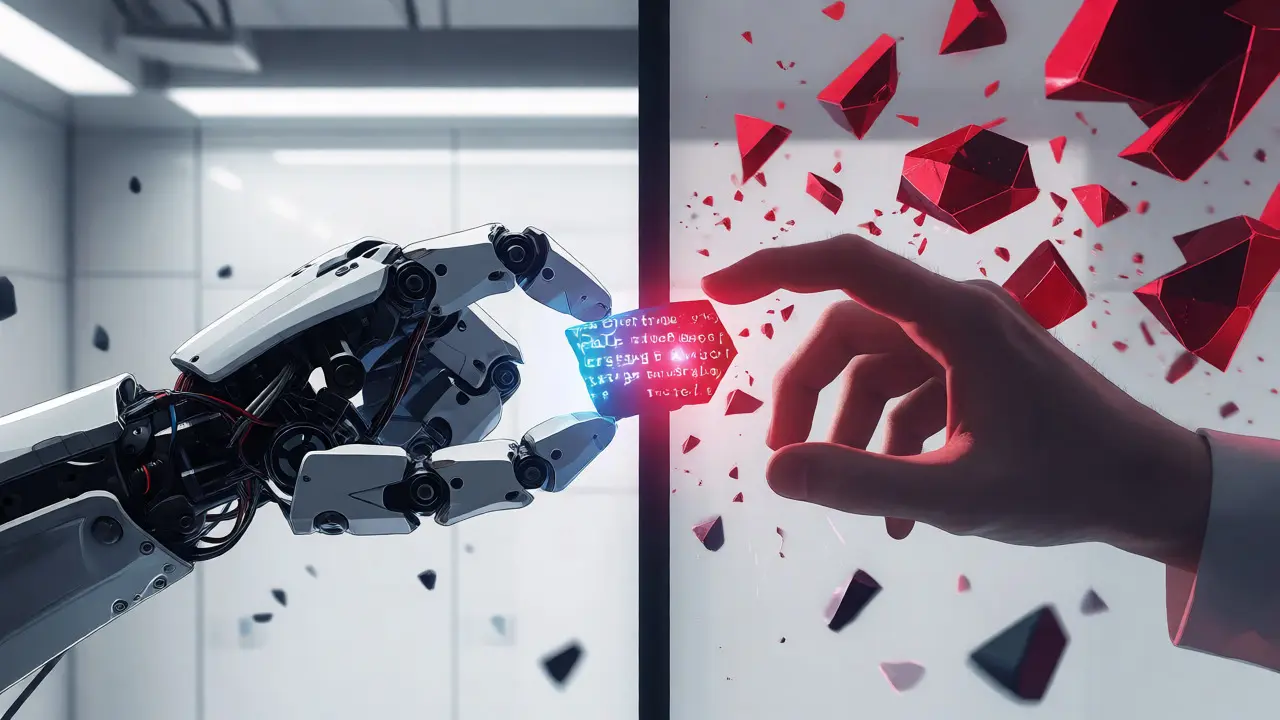
Security Vulnerabilities Are Systemic
It’s not just about individual bugs. AI models are trained on historical code, meaning they inherit historical mistakes. Dr. David Wheeler of the Linux Foundation pointed out that assistants are trained on deprecated libraries and insecure practices. When an AI suggests a solution, it’s often suggesting the most common solution, not the safest one. For example, SQL injection remains a top issue. Hacker News documented 63 specific cases in early 2024 where AI-generated code reintroduced classic injection flaws because the model had seen them thousands of times in successful-but-insecure repositories.
| Metric | Traditional Coding | Vibe Coding | Implication |
|---|---|---|---|
| Development Speed | Baseline | +55% faster (GitHub Study) | Rapid prototyping benefits |
| Security Flaws | Lower frequency | 40% contain vulnerabilities | Requires mandatory audit gates |
| Maintainability | High context | 74% poor documentation | Long-term technical debt risk |
| Algorithm Design | Superior | 68% worse performance | Human oversight essential for complex logic |

The Documentation Black Hole
Code is read more often than it is written. When an AI generates code, it often produces comments that are syntactically correct but semantically empty. An analysis by the Open Source Security Foundation found that 74% of AI-generated comments lacked sufficient context for future maintenance. Imagine opening a file six months later and seeing a comment that says "// Handles data processing." Great. What kind of data? Why this method? Who wrote it?
This lack of intent makes debugging a nightmare. If you don't know why the AI chose a specific library or pattern, you can't safely refactor it. Successful teams mitigate this by enforcing "AI code classification," tagging every snippet generated by a machine. High-risk components like authentication or payment handling require triple verification. Don't let the speed of generation blind you to the slowness of understanding.
Building an Ethical Workflow
So, do we abandon vibe coding? No. We just need to treat it like hiring a junior intern who works incredibly fast but knows nothing about your specific business rules. Here is how to keep your conscience-and your servers-clean:
- Mandatory Review Gates: Never merge AI code without human review. Microsoft’s data shows this adds 15-25% to dev time but cuts post-deployment bugs by 63%.
- Contextual Prompting: Feed the AI your existing architecture constraints. Don't just ask for a function; ask for a function that fits your error-handling standard.
- Automated Security Scanning: Use tools like GitHub Copilot Business’s integrated scanners. They flag 89% of known vulnerability patterns, acting as a first line of defense.
- Document the "Why": Force developers to rewrite AI comments to explain the business logic, not just the syntax.
The goal isn't to stop using AI. It's to stop pretending the AI is responsible. You are. The moment you deploy that code, you own its behavior, its bugs, and its breaches. Treat vibe coding as a powerful assistant, not an autonomous engineer, and you’ll stay ahead of both the hackers and the regulators.
Does vibe coding reduce code quality?
Not necessarily, but it shifts where quality issues arise. While boilerplate code is produced faster and often correctly, complex algorithm design suffers. Stanford University studies showed human developers outperformed AI by 68% in complex logic tasks. Additionally, AI-generated code often lacks proper documentation, leading to long-term maintainability issues unless strictly reviewed.
Who is liable if AI-generated code causes a security breach?
Currently, liability typically falls on the organization or developer who deploys the code. Since AI models are probabilistic and not deterministic agents, they cannot hold legal responsibility. Regulations like the EU Cyber Resilience Act place the burden on manufacturers to ensure AI-assisted products meet safety standards, effectively making human oversight a legal requirement.
Is vibe coding safe for production environments?
It can be, but only with rigorous safeguards. A 2023 Carnegie Mellon study found 40% of AI code had security flaws. Safe production use requires mandatory human review, automated security scanning, and strict testing protocols. Industries like fintech adopt it cautiously (18% adoption) compared to e-commerce (79%) due to higher risk stakes.
How does vibe coding affect developer skills?
It transforms roles from code creators to code reviewers and architects. Junior developers may struggle with security awareness without proper training, needing 80+ hours to adapt. Senior developers leverage it for speed but must invest in learning how to critique AI outputs effectively to avoid inheriting systemic vulnerabilities from training data.
What are the main ethical concerns with AI code?
Key concerns include accountability gaps, hidden biases in training data, and the propagation of deprecated or insecure coding practices. There is also the issue of intellectual property ambiguity when AI reproduces code snippets from licensed repositories without clear attribution or license compliance checks.