
Imagine handing a software ticket to an engineer who never sleeps, reads your entire codebase in seconds, and pushes a fix before you finish your morning coffee. This isn't science fiction anymore. By mid-2026, autonomous coding agents have moved from experimental demos to active participants in production environments at major financial institutions and tech firms. But here is the catch: while these agents can boost commit rates by three to four times, they also introduce security vulnerabilities at alarming rates if left unchecked.
The landscape of software development has shifted dramatically since early 2023. We are no longer just talking about autocomplete tools that suggest the next line of code. We are talking about systems that plan tasks, edit multiple files, run tests, and open pull requests with minimal human intervention. The question for engineering leaders in 2026 is not whether to use them, but how to harness their speed without collapsing under the weight of technical debt and security breaches.
What Exactly Are Autonomous Coding Agents?
To understand the risk, we first need to define the tool. An autonomous coding agent is an AI-driven system built on large language models (LLMs) that connects directly to development infrastructure. Unlike simple assistants, these agents have agency. They can execute shell commands, access version control systems like Git, interact with CI/CD pipelines, and even browse documentation to solve problems independently.
The architecture typically consists of three layers:
- The Brain: An LLM (like GPT-4 or Claude Sonnet) responsible for reasoning and code generation.
- The Agent Layer: Software that manages state, breaks down complex tasks into steps, and decides which tools to use.
- The Environment: A sandboxed space where the agent runs code safely, often equipped with a file system, browser, and terminal.
Frameworks like LangChain provide the glue for these components, allowing developers to build custom agents using patterns like ReAct (Reason + Act). In this pattern, the model thinks through a problem, then takes an action-such as querying a database or running a test-and uses the result to inform its next thought. This loop continues until the task is complete.
The Leading Players in the 2026 Landscape
The market has consolidated around a few key players that define what "autonomy" looks like today. Understanding the differences between them helps teams choose the right level of trust.
| Agent Name | Type | Key Feature | Best Use Case |
|---|---|---|---|
| Devin | SaaS Platform | Full sandbox environment with browser and shell | Complex bug fixes and multi-file refactoring |
| GitHub Copilot Workspace | IDE Integration | Deep integration with GitHub issues and PRs | Enterprise teams already in the GitHub ecosystem |
| Cursor | AI-First Editor | Composer mode for multi-file edits | Rapid prototyping and small feature implementation |
| Claude Code | CLI Agent | Terminal-based execution with high context window | Backend logic and script automation |
| Replit Agent | Browser-Based | Builds full apps from natural language prompts | Non-technical users and quick MVP creation |
Devin, launched by Cognition Labs, stands out as the most prominent example of a fully autonomous agent. It operates in a cloud sandbox, proposing editable plans, executing changes, and deploying code. Goldman Sachs, for instance, deployed Devin as an AI "employee" to handle full-stack development tasks, aiming to reduce latency between trading desk requests and implementation. Reports suggest such agents could write up to 50% of internal code in some organizations by late 2026.
The Productivity Promise: Why Teams Adopt Them
The incentives for adoption are clear and quantifiable. According to research from the Cloud Security Alliance in April 2026, Fortune 50 enterprises observed AI-assisted developers producing commits at three to four times the rate of their peers. This isn't just about typing faster; it's about reducing cognitive load.
Teams report genuine ROI when offloading specific types of work:
- Bug Triage: Agents can quickly identify root causes in log files and propose patches.
- Data Migrations: Repetitive scripts for moving data between schemas are ideal for agents.
- Test Generation: Writing comprehensive unit tests is time-consuming for humans but trivial for agents.
- Legacy Code Refactoring: Agents can read outdated codebases and modernize syntax or libraries systematically.
Furthermore, these tools democratize software creation. Non-technical stakeholders can now adapt complex processes or build simple applications using natural language, bridging the gap between business requirements and technical implementation. However, this accessibility comes with a hidden cost that many teams underestimate.

The Security Reality: Vulnerabilities by Default
Here is where the story gets complicated. While productivity metrics soar, security metrics often plummet. Extensive empirical research from 2024 to 2026 reveals that AI-generated code is rarely "secure by default." In fact, it is often insecure by design due to the nature of how LLMs predict text.
Veracode’s 2025 GenAI Code Security Report found that 45% of AI-generated code samples introduced OWASP Top 10 vulnerabilities. The numbers get worse for specific languages and tasks:
- Java: Showed a 72% security failure rate in certain contexts.
- Cross-Site Scripting (XSS): LLMs failed to secure code against XSS in 86% of cases.
- Log Injection: Failed to prevent log injection attacks in 88% of cases.
A formal verification study titled "Broken by Default," published in April 2026, was even more damning. It found that 55.8% of AI-generated artifacts contained at least one formally proven vulnerability. Worse still, industry-standard Static Application Security Testing (SAST) tools missed 97.8% of those verified issues. This means your existing security scanners might be blind to the unique flaws introduced by AI agents.
Real-world incidents confirm these lab results. Georgia Tech’s Vibe Security Radar tracked CVEs attributable to AI coding tools. In January 2026, there were 6 confirmed AI-attributed CVEs. By March 2026, that number jumped to 35-a sixfold increase in two months. Of these, 27 were linked to Claude Code alone, partly because its commit messages make attribution easier. Researchers estimate the true number of exploitable flaws in public repositories is 5 to 10 times higher than the confirmed count.
Why Do These Failures Happen?
Understanding the root cause helps mitigate the risk. LLMs are trained on vast datasets of public code, much of which contains subtle bugs or outdated practices. When an agent generates code, it is statistically predicting the most likely next token, not verifying logical correctness or security compliance.
Additionally, iterative refinement can worsen security. A June 2026 study showed a 37.6% increase in critical vulnerabilities after just five rounds of agent-led "improvements." As agents refactor code to meet performance or style guidelines, they may inadvertently introduce race conditions, buffer overflows, or hard-coded secrets. Without strict guardrails, autonomy becomes a liability.
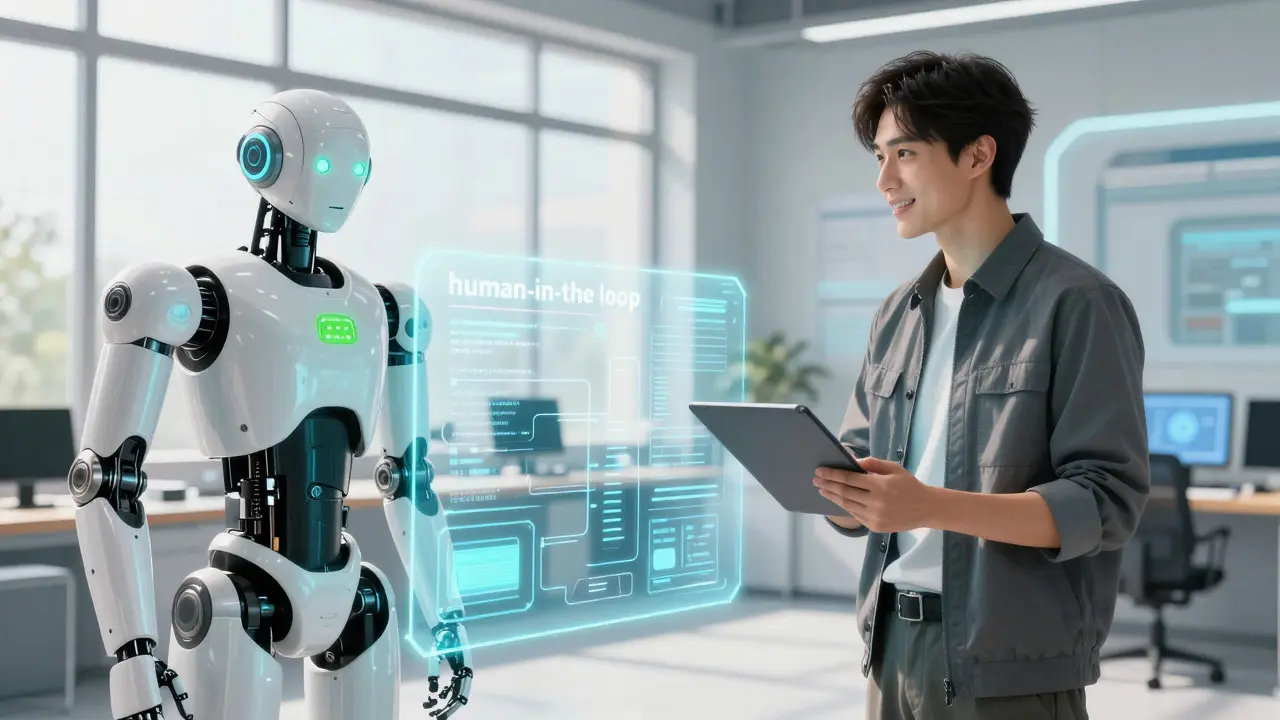
Governance Frameworks for Safe Deployment
To balance opportunity and risk, leading organizations are implementing rigorous governance frameworks. Treating an autonomous agent like a junior developer is a useful heuristic. You wouldn't let a junior dev push directly to production without review; why treat an AI differently?
Effective strategies include:
- Staged Deployment: Never deploy AI-generated code directly to production. Require progression through development, staging, and canary environments with incremental traffic.
- Human-in-the-Loop Review: Mandate peer review for all AI-written code. Senior engineers should verify logic, especially for authentication, cryptography, and data handling.
- Enhanced Scanning: Configure CI/CD pipelines to apply stricter scanning to AI-tagged commits. Use deep static analysis and dynamic testing specifically tuned for AI patterns.
- Data Boundary Controls: Prevent regulated data (like HIPAA or GDPR-protected info) from entering agent prompts. Use enterprise tiers that process requests in-memory without retaining proprietary code.
- Limit Autonomy Scope: Start with low-risk tasks like test generation or documentation. Gradually expand to bug fixes and small features as trust builds.
For regulated industries, compliance requires additional steps. Vendor agreements must include Business Associate Agreements (BAAs) or Data Processing Agreements (DPAs). Audit trails must clearly attribute each AI-generated segment to a named human owner. Tools like GitHub Copilot Enterprise offer controls like content exclusions, data residency options, and IP indemnity to help meet these standards.
Practical Checklist for Engineering Leaders
If you are considering integrating autonomous coding agents into your production workflow, use this checklist to assess readiness:
- [ ] Define Approved Use Cases: Clearly list which tasks agents can perform (e.g., unit tests, boilerplate) and which are forbidden (e.g., auth logic).
- [ ] Instrument Monitoring: Set up alerts for unusual code patterns or dependency changes introduced by agents.
- [ ] Enforce Test Coverage: Require minimum 80% unit test coverage for any AI-generated module.
- [ ] Tag Commits: Use metadata to tag commits created by AI tools for easier auditing and rollback.
- [ ] Train Your Team: Educate developers on how to spot common AI hallucinations and security anti-patterns.
- [ ] Start Small: Keep AI-generated code to 20-30% of the codebase initially. Scale up only after validating reliability.
The Future Trajectory: Regulation and Evolution
As we move through 2026, the trend is toward tighter integration and stricter regulation. Agents like Devin are evolving to include parallel work management and deeper codebase understanding via search and wiki integrations. They are becoming more like remote team members embedded in Slack and GitHub workflows.
However, regulators are watching closely. The surge in AI-attributed CVEs suggests that future compliance frameworks will mandate auditability, data boundaries, and human accountability. Organizations that proactively implement robust governance now will be better positioned to adapt to upcoming regulations like the EU AI Act.
Ultimately, autonomous coding agents are powerful tools, not replacements. They excel at speed and scale but lack the contextual judgment and security awareness of experienced engineers. The winning strategy for 2026 and beyond is symbiotic: leverage AI for heavy lifting while maintaining rigorous human oversight for quality and security. Treat AI output as untrusted until verified, and you can capture the productivity gains without paying the price in broken systems.
Are autonomous coding agents safe for production systems?
They can be safe, but only with strict governance. Research shows 45% of AI-generated code contains vulnerabilities. Safety requires human review, enhanced security scanning, staged deployments, and limiting agent autonomy to well-scoped tasks. Never deploy AI code directly to production without verification.
What is the best autonomous coding agent in 2026?
There is no single "best" agent; it depends on your needs. Devin is top-tier for complex, multi-step tasks in a sandbox. GitHub Copilot Workspace excels for teams deeply integrated with GitHub. Cursor is popular for rapid prototyping and multi-file edits within an IDE. Choose based on your workflow and security requirements.
How much does AI coding increase developer productivity?
Studies indicate AI-assisted developers can produce commits at 3 to 4 times the rate of non-assisted peers. However, this metric focuses on volume, not quality. Productivity gains are most significant for repetitive tasks like bug triage, test generation, and data migration.
Do standard security scanners detect AI-generated vulnerabilities?
Often, no. A 2026 study found that industry SAST tools missed 97.8% of formally proven vulnerabilities in AI-generated code. You need specialized scanning configurations and human review to catch these unique flaws effectively.
Can autonomous agents replace human software engineers?
Not currently. Agents excel at execution but lack strategic judgment, architectural insight, and nuanced understanding of business logic. They are best viewed as powerful junior developers or collaborators that augment human teams rather than replace them.
What are the biggest security risks of AI code?
Common risks include cross-site scripting (XSS), log injection, hard-coded secrets, and path traversal vulnerabilities. LLMs often prioritize syntactic correctness over security best practices, leading to code that works but is easily exploitable.
How do I start using AI agents in my team?
Start small. Define clear use cases, train your team on AI pitfalls, enforce mandatory human reviews, and keep AI-generated code to 20-30% of your codebase initially. Use sandboxed environments and monitor for anomalies before scaling up.
Edward Gilbreath
they want you to believe these agents are helping but really its just a way to track every keystroke and sell your proprietary logic back to the corp overlords. the security breaches arent accidents theyre features designed to force dependency on their 'enterprise' tiers which cost more than hiring actual humans who might actually care about the code. wake up sheeple.
kimberly de Bruin
the machine writes the code but who writes the soul of the software when the algorithm dreams in binary it forgets the human element entirely we become mere observers of our own creation watching as silicon replaces synapse in the grand tapestry of digital existence is this progress or merely a faster path to obsolescence
Edward Nigma
everyone keeps talking about how dangerous AI code is but have you looked at the spaghetti code most senior devs leave behind after three coffees and a deadline panic? an agent making a XSS mistake is honestly cleaner than the legacy php mess i inherited last week. stop crying about vulnerabilities that standard tests would catch anyway and admit you just hate being replaced by something that doesnt need health insurance.
Francis Laquerre
In my experience working with distributed teams across Europe, the cultural shift required to trust these agents is far greater than the technical challenge. We see similar patterns in manufacturing automation where workers feared replacement only to find new roles in oversight. The key is communication. If you treat the team as partners in this transition rather than victims of efficiency, the adoption becomes smoother. It is not just about the code; it is about the people writing it and the systems supporting them.
michael rome
It is truly inspiring to see how technology continues to evolve to support our creative endeavors. While the risks mentioned are valid, remember that every great leap forward comes with a learning curve. Embrace the change! Your team has the capability to master these tools and set new standards for quality. Stay positive and keep pushing boundaries together.
Andrea Alonzo
I think it is so important that we take a moment to really consider the emotional impact on developers who have spent years honing their craft, only to be told that a script can do it faster, and while I agree that efficiency is good, we must not lose sight of the mentorship aspect where senior engineers guide juniors through complex problems, because if we let agents handle everything, we risk creating a generation of coders who never learn the foundational principles, so perhaps we should focus on using these tools to augment rather than replace the human connection in coding, ensuring that everyone feels valued and heard in this transition.
Saranya M.L.
The West always rushes into deployment without proper validation frameworks whereas Indian engineering culture emphasizes rigorous testing protocols from day one. The statistics cited here regarding OWASP vulnerabilities are indicative of poor governance structures prevalent in US tech firms. Our approach involves mandatory peer review cycles that integrate semantic analysis before any commit reaches staging. You cannot simply throw compute power at a problem without understanding the underlying architectural integrity. This is why global leadership in secure AI development will inevitably shift to regions that prioritize systematic verification over rapid prototyping hype.
om gman
oh look another article telling us how to babysit machines because apparently humans are too incompetent to write basic loops without hallucinating security holes. i suppose next year we'll need agents to remind us how to breathe properly. the fact that SAST tools miss 97% of issues just proves that the entire industry is built on sand and now you're pouring concrete on top of it with a robot arm. delightful.
Jeanne Abrahams
From down here in South Africa, we see this same narrative play out with infrastructure projects. Everyone promises efficiency but delivers debt. The real question isn't whether the code is secure, but whether the business model relies on churning out buggy features to upsell fixes later. Typical corporate theatre.