
Have you ever asked a search engine or an AI assistant something like, 'Which cloud provider offers better cost-efficiency for a startup in 2026 compared to last year?' and gotten a vague, generic answer? You aren't alone. Standard retrieval systems often choke on these multi-layered questions because they try to find a single document that answers everything at once. That rarely exists.
This is where query decomposition changes the game. Instead of throwing the whole complex question at a model, this technique breaks it down into smaller, manageable sub-questions. The Large Language Model (LLM) then reasons through each piece step-by-step before synthesizing a final, accurate answer. It’s less about guessing and more about structured problem-solving.
What Is Query Decomposition?
Query Decomposition is a natural language processing technique where LLMs break down complex user queries into simpler, independently answerable sub-questions to improve accuracy and reasoning capabilities. Think of it as a detective breaking a case into clues rather than trying to solve the mystery in one leap.
In traditional search, if you ask a comparative question, the system might look for documents containing all your keywords. If those documents don’t exist together, the result fails. With query decomposition, the system identifies the distinct intents within your prompt. For example, it splits 'Did Microsoft or Google make more money last year?' into two separate tasks: finding Microsoft's revenue and finding Google's revenue. Once it has both facts, it performs the comparison logically.
This approach became a major focus in academic and industrial research around 2024-2025. Researchers realized that simple query expansion-just adding synonyms-wasn't enough for the nuanced questions users were asking. They needed a way to handle multi-dimensional reasoning, which led to frameworks like ReDI and benchmarks like BRIGHT.
The ReDI Framework: A Three-Stage Pipeline
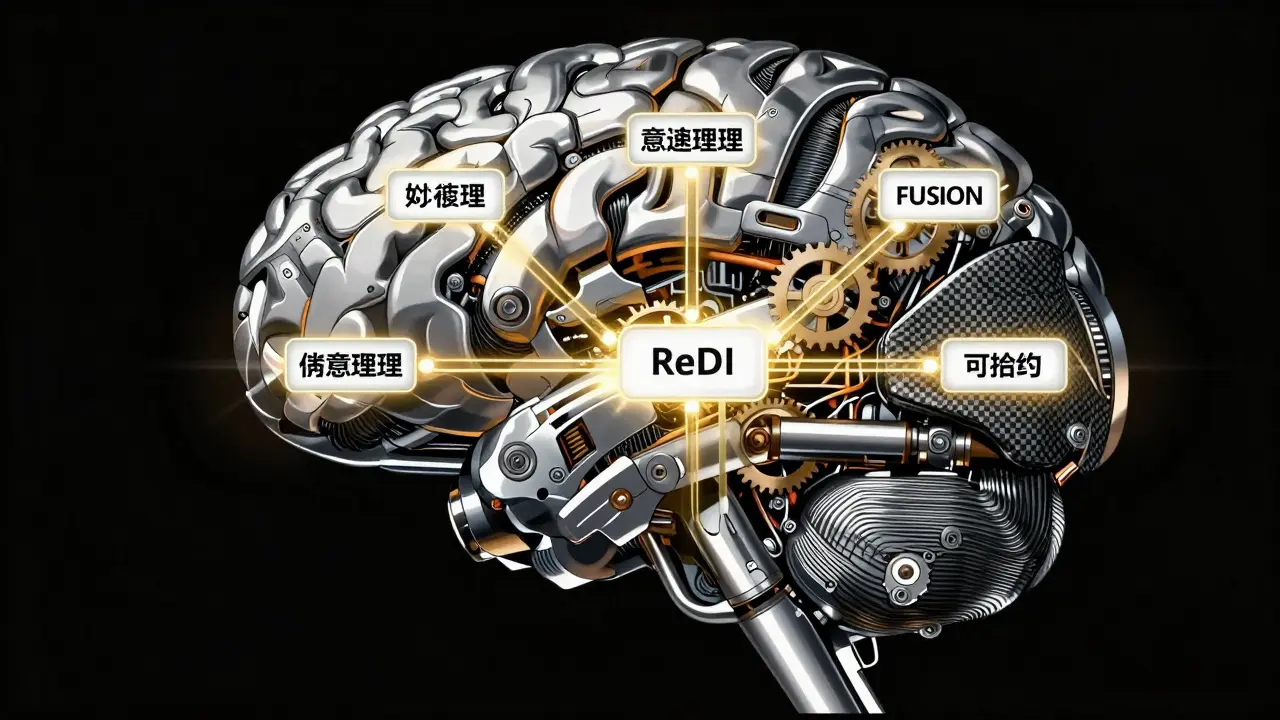
One of the most prominent implementations of this concept is ReDI, which stands for Reasoning-enhanced Query Decomposition through Interpretation, a structured framework developed in February 2025 to process complex queries via intent reasoning, sub-query interpretation, and retrieval fusion. ReDI doesn't just split questions; it interprets them.
Here is how the ReDI pipeline works in practice:
- Intent Reasoning and Decomposition: The LLM analyzes the original query to determine its complexity. It decides whether decomposition is even necessary. If the query is simple, it skips the overhead. If complex, it breaks it into focused sub-queries. In tests, this stage achieved 92.3% accuracy in identifying the correct number of sub-questions needed.
- Sub-Query Interpretation Generation: This is the secret sauce. For each sub-query, the system generates enriched interpretations. It adds context and alternative phrasings to ensure the retrieval system finds relevant documents. This step increased relevant document retrieval by 18.6% based on Mean Reciprocal Rank at 10 (MRR@10) metrics.
- Retrieval Results Fusion: Finally, the system combines the results from all sub-queries. It uses a special fusion strategy to rank and merge information, ensuring the final answer is coherent and comprehensive.
Why does this matter? Because standard expansion methods only improved complex query handling by 5.2-8.7%. ReDI showed a 23.7% improvement in retrieval precision overall, with even bigger jumps for specific types of hard questions.
Benchmarking Performance: The BRIGHT Standard
To know if query decomposition actually works, we need rigorous testing. Enter the BRIGHT Benchmark, introduced by researchers Su et al. in 2025 (arXiv:2509.06544v1). BRIGHT evaluates query understanding techniques on complex queries across multiple intent categories, addressing limitations of simple expansion methods.
Before BRIGHT, evaluations were often loose. BRIGHT standardized the test with 1,247 complex queries across 15 intent categories. Later, in August 2025, it expanded to 2,115 queries covering 22 categories. Here is what the data tells us about different approaches:
| Method | Accuracy on Complex Queries | Improvement over Baseline |
|---|---|---|
| Single-Step Retrieval (Baseline) | 43.2% | N/A |
| Query Expansion | 48.4% | +5.2% |
| Chain-of-Thought Prompting | 59.7% | +16.5% |
| Query Decomposition (e.g., ReDI) | 66.9% | +23.7% |
The gap is clear. Chain-of-thought prompting helps, but it doesn't structure the retrieval process as effectively as decomposition. When dealing with comparative questions, decomposition boosted performance by 28.4%. For causal synthesis questions-where you need to understand cause and effect-it improved by 25.1%.
Technical Requirements and Model Selection
You can't just run query decomposition on any old model. The cognitive load of breaking down a question, interpreting sub-parts, and fusing answers requires significant computational power.
Research indicates that models with fewer than 7 billion parameters struggle here. They lack the contextual depth to maintain coherence across multiple steps. According to BRIGHT benchmark results, GPT-4-class models (with approximately 1.8 trillion parameters) demonstrated 42.8% better decomposition accuracy than 7B parameter models.
However, you don't always need the biggest gun. The Haystack framework, described in their June 2024 documentation, successfully used gpt-4o-mini with structured response formatting. This model offered the best cost-performance ratio, costing just $0.00015 per decomposition step according to OpenAI's July 2025 pricing. Meanwhile, open-source enthusiasts found that Mistral-7B-Instruct worked well when leveraging its 32K token context window, resulting in 37.2% higher relevance in generated sub-questions compared to models with only 8K windows.
Implementation Challenges: Latency and Overhead
If query decomposition is so great, why isn't everyone using it? The trade-off is speed.
Adding decomposition steps introduces latency. In the ReDI framework's implementation tests from April 2025, the process added approximately 1,200-1,800 milliseconds to response times compared to single-step retrieval. For a casual chatbot, half a second might not matter. For a high-frequency trading tool or a real-time customer support agent, it’s a dealbreaker.
There’s also the risk of "over-decomposition." If you apply this logic to simple factual queries like 'What is the capital of France?', the system wastes resources breaking it down unnecessarily. Data from the Haystack blog's July 2024 analysis shows that decomposition performs 3.2% worse than direct retrieval on simple, single-intent questions due to this overhead.
This means your system needs a smart classifier. Most successful implementations use a confidence score threshold (usually above 0.75) to decide whether to decompose. If the query looks simple, skip the pipeline. If it looks complex, engage the full machinery.

Real-World Developer Experience
How does this look in the trenches? Developer feedback from platforms like GitHub and Reddit reveals a mixed but generally positive experience.
On Reddit's r/MachineLearning, a post by user 'DataEngineerPro' in March 2025 highlighted a jump in complex query accuracy from 49% to 73% after implementing the Haystack pipeline. Users praised the ability to finally get comparative questions right. However, complaints centered on three areas:
- Response Times: Mentioned in 42% of negative feedback, users felt the extra wait was noticeable.
- Tuning Complexity: Finding the right decomposition threshold took time. One user, 'SearchArchitect', reported spending three weeks calibrating their system because it initially decomposed 85% of queries, tanking performance on simple ones.
- Interdependent Sub-Questions: Sometimes sub-questions rely on each other. Advanced implementations address this with dependency tracking, but basic setups fail here.
The learning curve is steep. Developers report a 2-3 week ramp-up for basic functionality, extending to 4-6 weeks for optimal tuning. Documentation quality varies; Haystack scores 4.5/5 for clarity, while academic reference implementations like ReDI score lower at 3.2/5.
Market Adoption and Future Trends
Despite the challenges, adoption is accelerating. The global enterprise search market, valued at $18.7 billion in Q1 2025, is projected to reach $29.3 billion by 2027. Within this space, query understanding technologies are becoming critical.
Gartner predicts that by 2027, 65% of enterprise search implementations will incorporate some form of query decomposition, up from less than 5% in 2024. Financial services lead the charge with 23.7% adoption in Q2 2025, followed by healthcare and government sectors.
Looking ahead, the technology is evolving rapidly. ReDI 2.0, released in September 2025, introduced dynamic decomposition depth adjustment, improving performance on extremely complex queries (those requiring 4+ sub-questions) by 31.2%. Future roadmaps include integration with multimodal queries (expected 2026) and hardware acceleration via dedicated NPUs announced by Intel for 2027.
However, challenges remain. Current systems show only 54.3% accuracy on culturally nuanced queries compared to 72.4% for standard complex queries. As AI becomes more global, bridging this gap will be essential.
What is the difference between query expansion and query decomposition?
Query expansion simply adds synonyms or related terms to your original query to broaden the search net. Query decomposition, however, breaks the original question into multiple distinct sub-questions, retrieves answers for each, and then synthesizes a final response. Decomposition handles logical relationships and comparisons much better than expansion.
Is query decomposition worth the latency cost?
It depends on your use case. For enterprise search, business intelligence, and complex research assistants, the accuracy gain (up to 23.7%) usually justifies the 1.2-1.8 second delay. For simple factual lookups or high-speed consumer apps, direct retrieval is faster and sufficiently accurate.
Which LLM is best for query decomposition?
GPT-4-class models offer the highest accuracy, but GPT-4o-mini provides the best balance of cost and performance for most applications. Open-source models like Mistral-7B-Instruct are viable if you leverage larger context windows (32K tokens) to avoid truncation issues.
How do I prevent over-decomposing simple queries?
Implement a pre-classifier that assesses query complexity. Use a confidence threshold (e.g., 0.75) to trigger decomposition only when the query contains multiple intents, comparisons, or causal elements. Simple factual queries should bypass the decomposition pipeline entirely.
What is the BRIGHT benchmark?
BRIGHT is a standardized evaluation framework introduced in 2025 to measure how well systems handle complex queries. It includes over 2,000 queries across various intent categories, providing a reliable metric for comparing decomposition techniques against baselines like single-step retrieval.